Orchid lily
Barclaya longifolia
Also known as Barclaya
FreshwaterBulb / tuberSide shootsBulb offsets
Care at a glance
- Light
- Medium light
- CO2
- CO₂ beneficial
- Temperature
- 72–82°F
- 22–28°C
- Max height
- 15.7 in
- 40 cm
- Growth rate
- Medium
- Placement
- Midground
- Type
- Bulb / tuber
- pH
- 6.0–7.5
- Hardness
- 2–12 dGH
- Spread
- 9.8 in (25 cm)
- Nutrient uptake
- Root + water column
- Growth region
- Submersed
- Difficulty
- Medium
- Family
- Nymphaeaceae
- Origin
- Southeast Asia (Indochina to northwest Peninsular Malaysia, including Thailand)
Overview
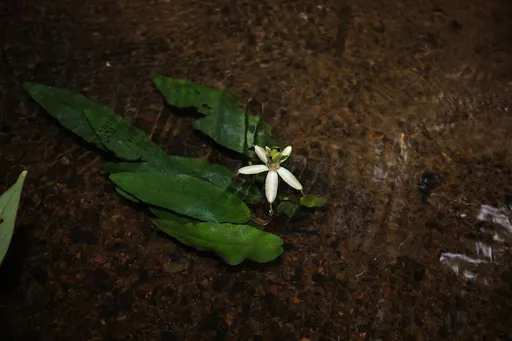
Orchid lily is a submerged bulb plant for the midground, and it is moderately demanding to keep.
Did you know
Orchid lily is one of the very few water lilies that blooms entirely underwater. Its closed, cleistogamous flowers fertilize themselves and set seed without ever reaching the surface. It can also send open flowers up to the surface.
Caring for orchid lily
Plant the bulb in a nutrient-rich substrate with the growing tip just at or above the surface. Leave it undisturbed once it is in, since it dislikes being moved.
Orchid lily draws heavily from the substrate, so use root tabs or an enriched base plus iron. It also takes nutrients through its leaves, so a liquid fertilizer helps. Fed well under medium light, it shows its best deep red to burgundy color. CO2 is not required, but it improves leaf density and size.
It grows at a moderate pace in water of 72 to 82°F (22 to 28°C). Propagate it from side shoots once they have a few leaves, or by separating offsets from the bulb.
It occasionally drops all its leaves and goes dormant for a few months. Do not pull the bulb. Keep conditions stable, and it will sprout again.
Good to know
Orchid lily belongs to the water lily family, Nymphaeaceae. Nathaniel Wallich described it in 1827 as the type species of the genus Barclaya. Unlike most water lilies, it stays fully submerged and grows long, narrow, lance-shaped leaves from a bulb-like rhizome instead of floating pads. The leaves are edible and are used in Laotian cuisine.
In the wild
Orchid lily is native to Southeast Asia, from Indochina through southern Thailand into northwest Peninsular Malaysia. It grows in clear, soft, often fast-flowing forest streams.
Common questions
Does orchid lily need to be planted in the substrate?
Yes, but only partly. Push the roots into the substrate and leave at least the top half of the bulb uncovered so it doesn't rot.
Does orchid lily need CO2?
No, but it helps. Orchid lily can grow without injected CO2, and added CO2 makes it grow faster.
How much light does orchid lily need?
Orchid lily wants medium light. A light sold for planted tanks covers it.
Does orchid lily need root tabs?
They help. Orchid lily takes nutrients through both its roots and its leaves. Root tabs near its roots and a liquid fertilizer cover both.
How do you propagate orchid lily?
Orchid lily propagates by side shoots and bulb offsets. Cut a side shoot off once it has a few leaves and plant it on its own. The bulb forms offsets, which can be separated and planted on their own.
How tall does orchid lily grow?
Orchid lily grows to about 15.7 in (40 cm) tall. It grows at a moderate pace.
Related plants
- Medium lightMidground15.7 in (40 cm)
Orchid lily Rosea
Barclaya longifolia 'Rosea'
Medium light · Midground
 Medium lightMidground19.7 in (50 cm)
Tiger lotus
Nymphaea lotus
Medium light · Midground
 Medium lightMidground23.6 in (60 cm)
Red tiger lotus
Nymphaea lotus
Medium light · Midground
 Medium lightMidground23.6 in (60 cm)
Red water lily
Nymphaea rubra
Medium light · Midground
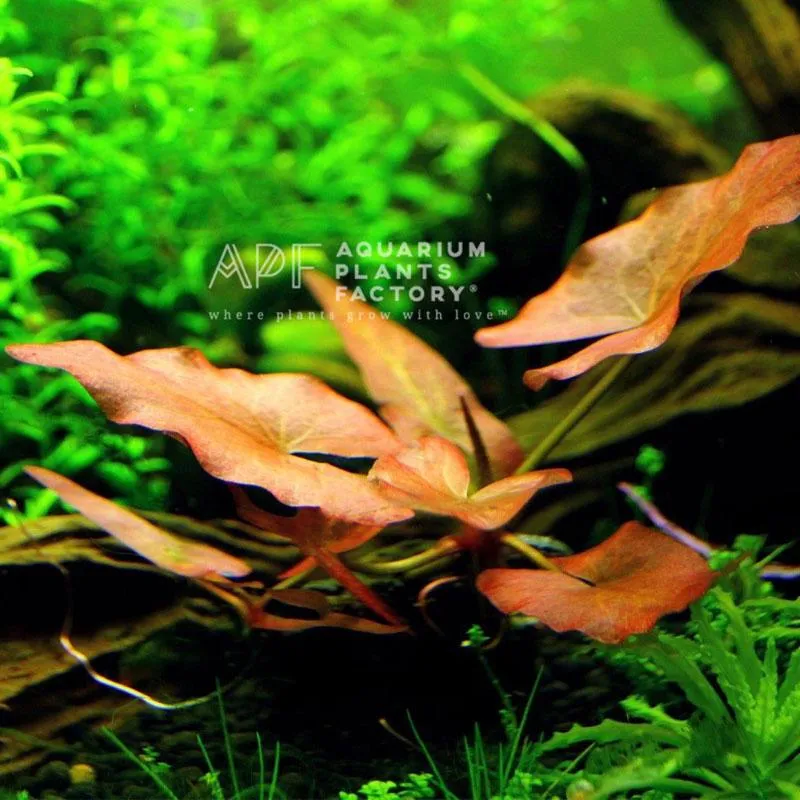 Medium lightMidground9.8 in (25 cm)
Dwarf aquarium lily
Nymphaea nouchali
Medium light · Midground
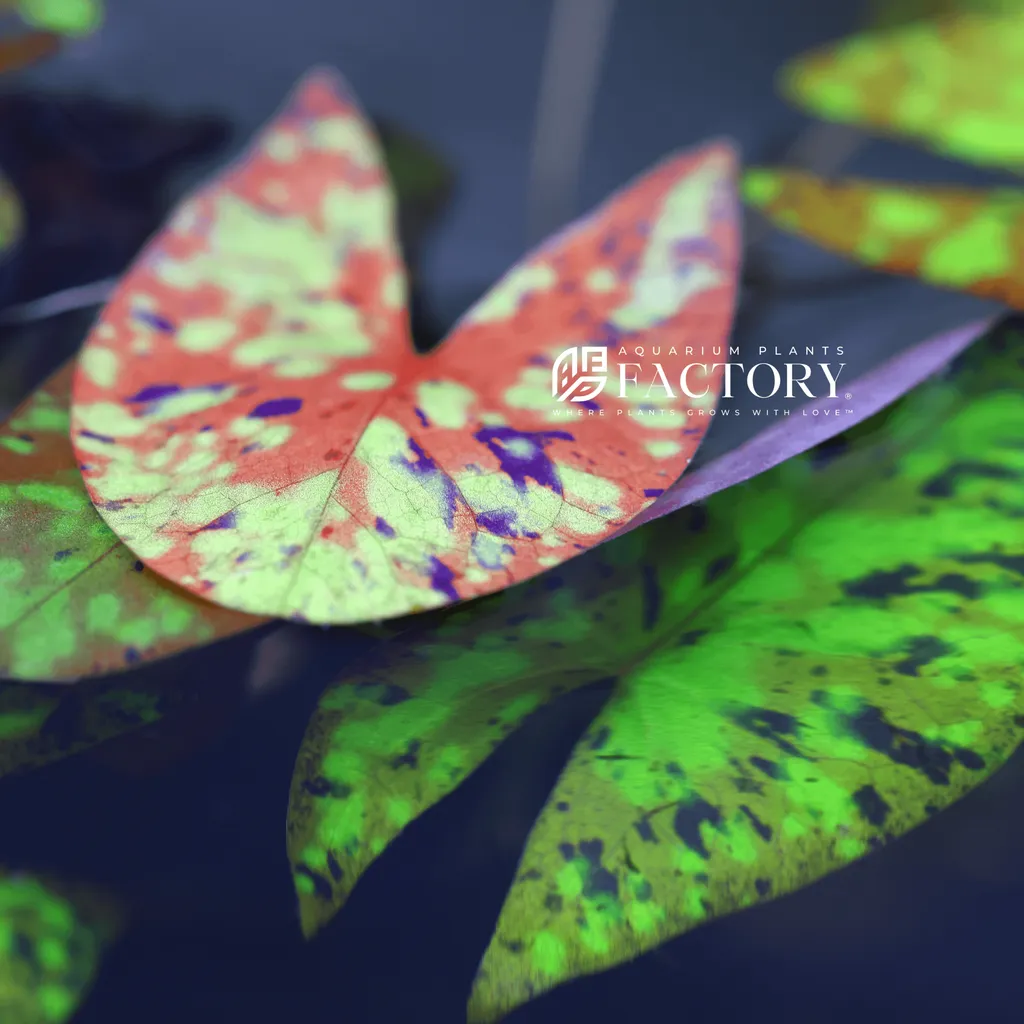 Medium lightMidground9.8 in (25 cm)
Micrantha lily
Nymphaea micrantha
Medium light · Midground