Echinodorus floribundus
Also known as Echinodorus muricatus, Echinodorus punctatus, Aquarius floribundus, Echinodorus grandiflorus, Echinodorus grandifolius
FreshwaterRosettePlantletsRhizome division
Care at a glance
- Light
- Medium light
- CO2
- CO₂ beneficial
- Temperature
- 68–82°F
- 20–28°C
- Max height
- 39.4 in
- 100 cm
- Growth rate
- Medium
- Placement
- Background
- Type
- Rosette
- pH
- 5.0–7.0
- Hardness
- 3–15 dGH
- Spread
- 31.5 in (80 cm)
- Nutrient uptake
- Root feeder
- Growth region
- Submersed or emersed
- Difficulty
- Medium
- Family
- Alismataceae
- Origin
- Southern Mexico and Cuba to northern Argentina
Overview
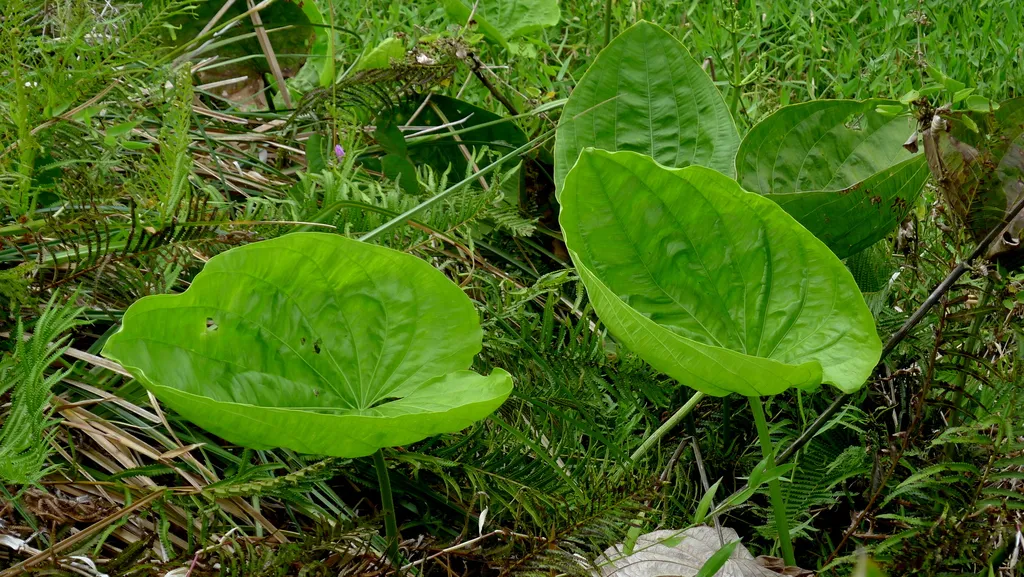
Echinodorus floribundus is a very large bog sword of medium difficulty, and a closed aquarium only ever holds a young plant. It suits the background of a big tank for a while, but its best long-term home is an open tank or paludarium.
Did you know
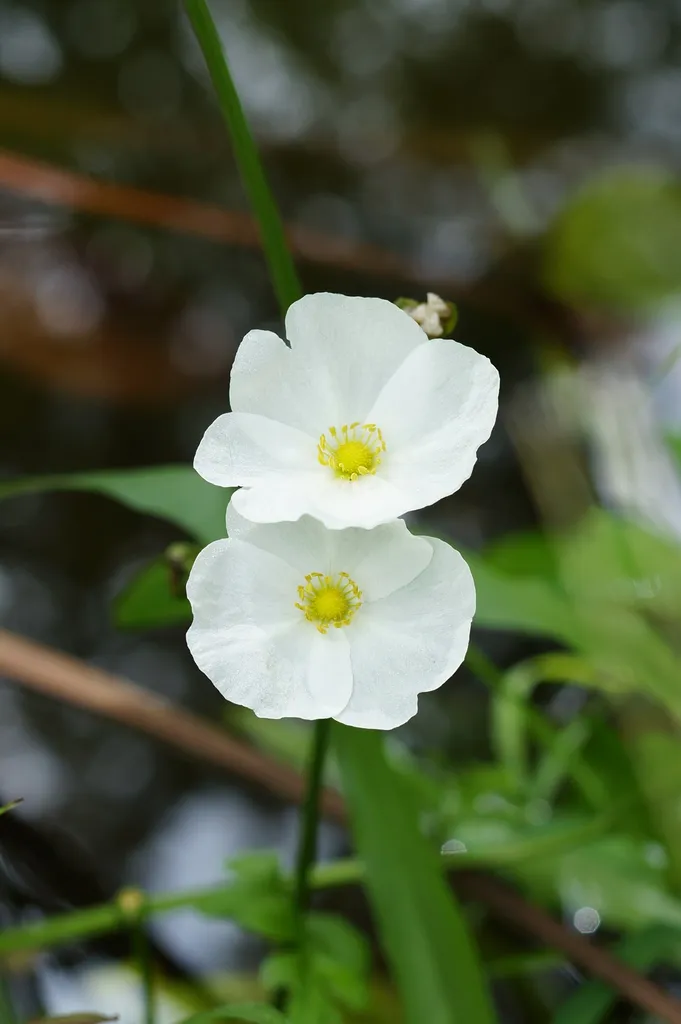
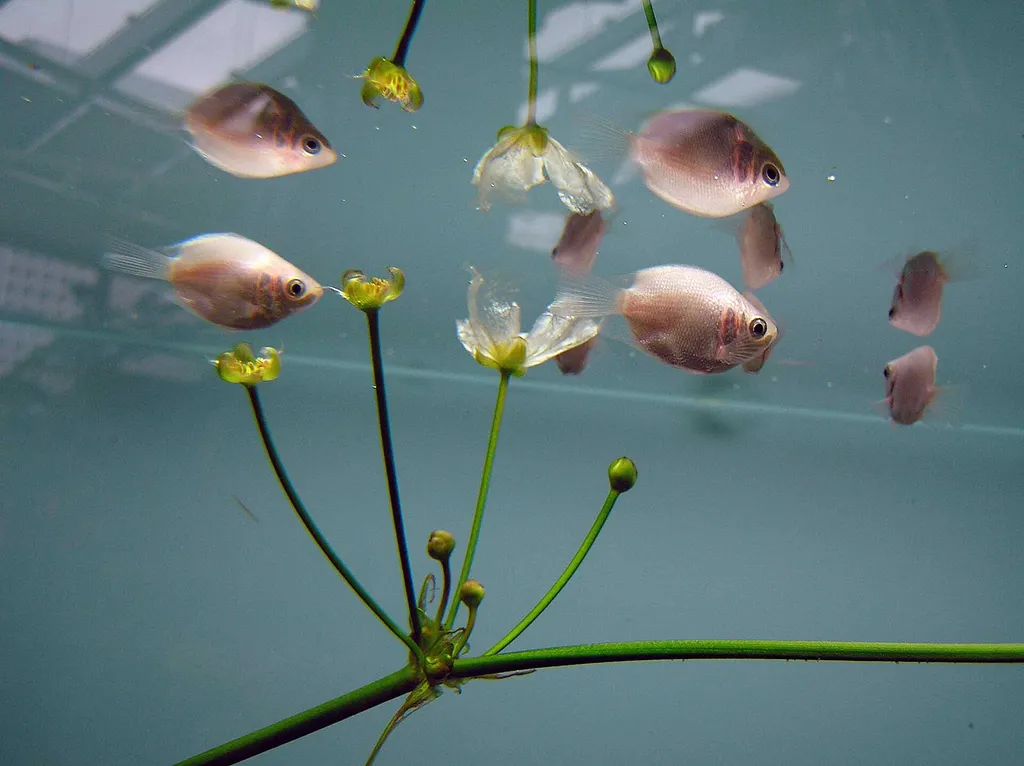
Once Echinodorus floribundus grows past the water surface, it switches to firm emersed leaves. It then sends up tall, freely branching flower stalks, the source of its name, which means abundantly flowering.
Caring for Echinodorus floribundus
Plant Echinodorus floribundus in a rich substrate with the crown just above the surface, and feed it at the roots with root tabs. It reaches a meter when grown emersed, and its rosette spans a similar width. Submersed plants work for a while as a solitary specimen in a large tank, but they constantly push toward the surface.
Medium or stronger light suits it. CO2 is optional and speeds growth. Keep it at 68 to 82°F (20 to 28°C), with a pH of 5 to 7 and a hardness of 3 to 15 dGH.
Remove aging submersed leaves before they shade everything beneath them. Propagate it from plantlets on the flower stalks or by dividing the rhizome.
Good to know
Echinodorus floribundus is a sword plant in the family Alismataceae. It has circulated in the hobby under the synonyms Echinodorus muricatus and Echinodorus punctatus, and shops still print muricatus. Recent revisions of the genus place it in Aquarius, as Aquarius floribundus. It is closely allied to Echinodorus grandiflorus and varies notably across its range.
In the wild
Echinodorus floribundus has a wide natural range. It grows from southern Mexico and Cuba through Colombia and Venezuela to northern Argentina and Uruguay. It lives in ponds, marshes, floodplains and wet meadows. It stands emersed for most of the year on broad, long-stalked leaves and tolerates submersion mainly during floods. Fully submersed life is the exception in nature.
Common questions
Does Echinodorus floribundus need to be planted in the substrate?
Yes. Bury the roots and leave the crown, where the leaves join, just above the substrate.
Does Echinodorus floribundus need CO2?
No, but it helps. Echinodorus floribundus can grow without injected CO2, and added CO2 makes it grow faster.
How much light does Echinodorus floribundus need?
Echinodorus floribundus wants medium light. A light sold for planted tanks covers it.
Does Echinodorus floribundus need root tabs?
Yes. Echinodorus floribundus draws much of its food through its roots. Push root tabs in near it, or grow it in a nutrient-rich soil.
How do you propagate Echinodorus floribundus?
Echinodorus floribundus propagates by plantlets and rhizome division. Small plantlets form on the plant and can be detached once they have a few roots. Cut the rhizome into pieces with several leaves each, then tie or plant each piece.
How tall does Echinodorus floribundus grow?
Echinodorus floribundus grows to about 39.4 in (100 cm) tall. It grows at a moderate pace.
Related plants
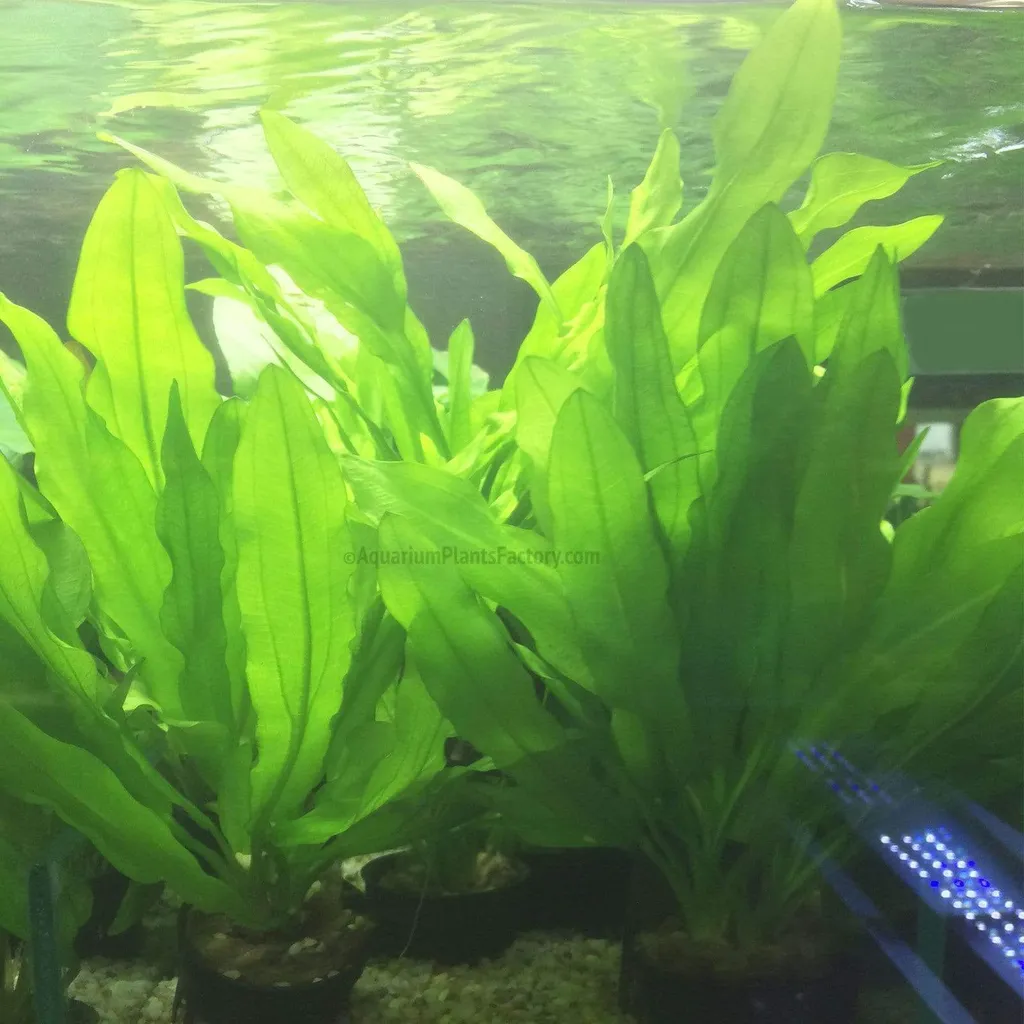 Medium lightBackground23.6 in (60 cm)
Ruffled sword
Echinodorus major
Medium light · Background
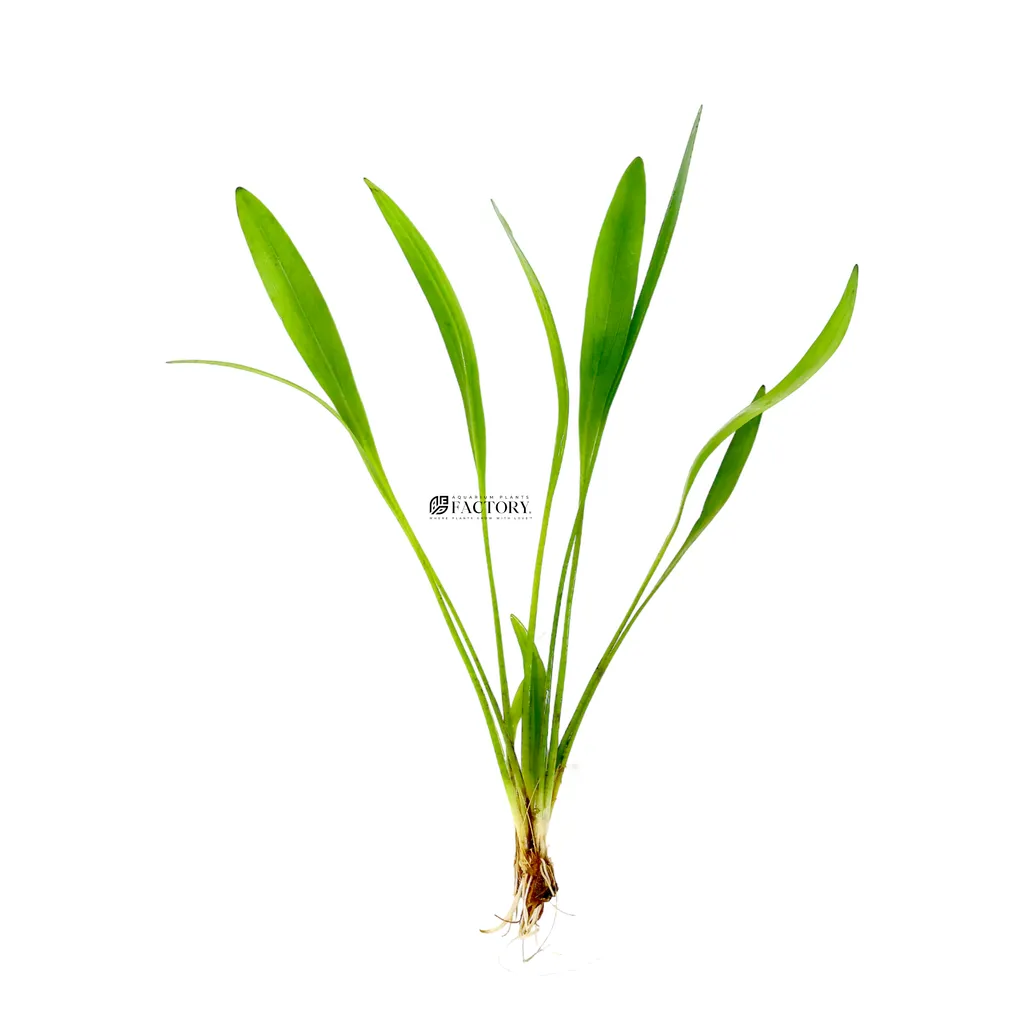 Medium lightBackground21.7 in (55 cm)
Uruguay sword
Echinodorus uruguayensis
Medium light · Background
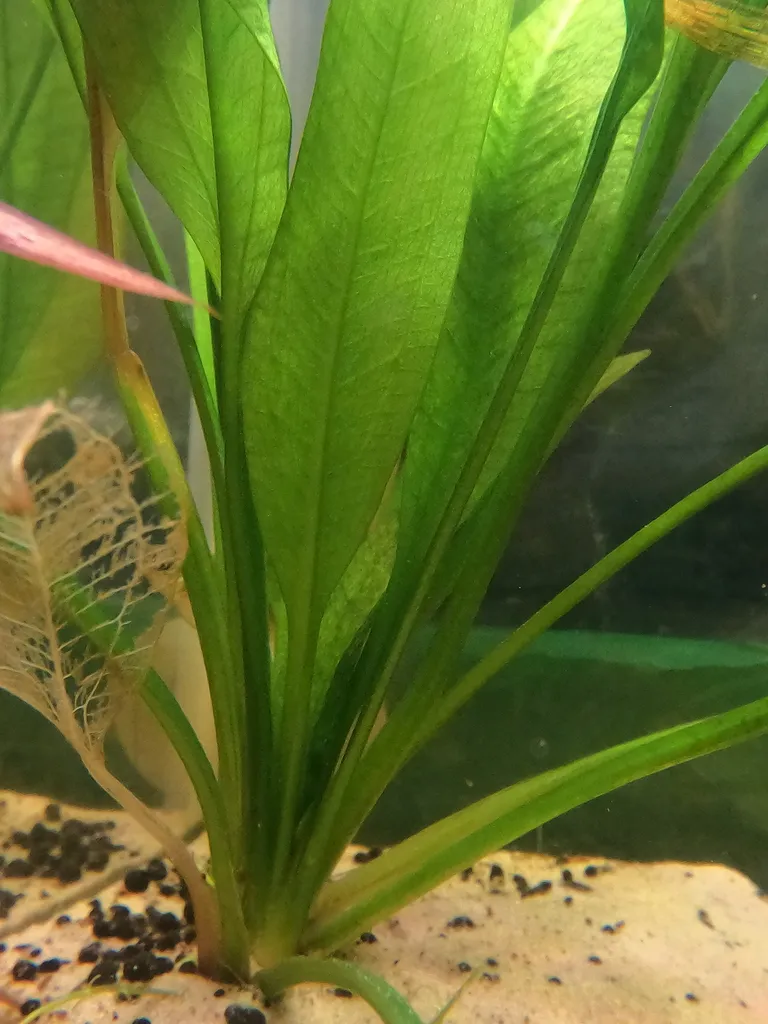 Medium lightBackground19.7 in (50 cm)
Amazon sword
Echinodorus grisebachii
Medium light · Background
 High lightBackground19.7 in (50 cm)
Horemanii sword
Echinodorus horemanii
High light · Background
 Medium lightBackground19.7 in (50 cm)
Marble queen sword
Echinodorus cordifolius
Medium light · Background
 Medium lightBackground19.7 in (50 cm)
Melon sword
Echinodorus osiris
Medium light · Background