Tanganyika spotted spiny eel
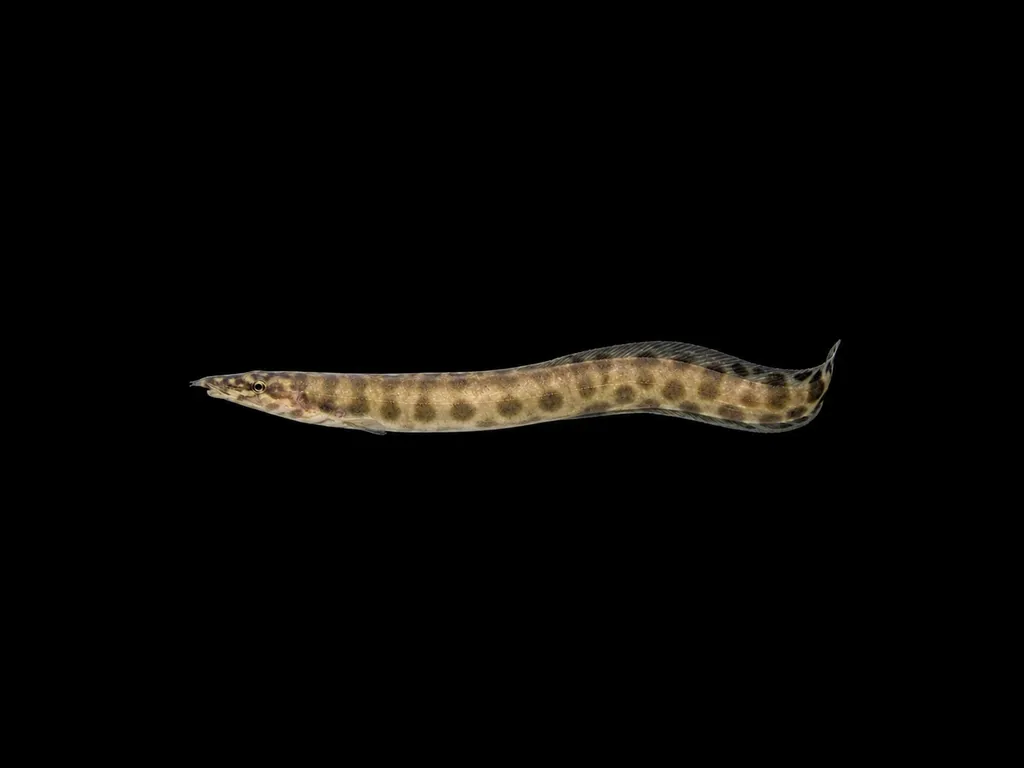
Mastacembelus ellipsifer
Also known as Ellipsifer eel, Banded Tanganyika eel
FreshwaterFish
Care at a glance
- Temperature
- 75–81°F
- 24–27°C
- pH
- 7.8–9.0
- Adult size
- 17.7 in
- 45 cm
- Minimum tank
- 79 gal
- 300 L
- Temperament
- Mostly peaceful
- Social behavior
- Solitary
- Tankmates
- With caution
- Swim level
- Bottom
- Diet
- Carnivore
- Difficulty
- Medium
- Breeding
- No record
- Rarity
- Rare
- Family
- Mastacembelidae
- Origin
- Lake Tanganyika
Overview
The Tanganyika spotted spiny eel is a solitary, rock-dwelling eel that suits a hard-water community of larger rift-lake fish. It is a fish for a keeper with some experience.
Did you know
Lake Tanganyika is famous for its cichlids, but its spiny eels tell the same story. More than a dozen species of Mastacembelus evolved in that one ancient lake and live nowhere else. The Tanganyika spotted spiny eel is one of them.
Caring for the Tanganyika spotted spiny eel
Keep the Tanganyika spotted spiny eel in a tank of 79 gal (300 L) or larger, with a firm lid. Give it a sand bed to bury in and deep, piled rockwork with crevices to thread. It stays near the bottom and forages once the tank settles.
It needs hard, alkaline water at 75 to 81°F (24 to 27°C) and a pH of 7.8 to 9.0. Keep conditions clean, stable and rich in oxygen. Feed meaty foods such as earthworm, prawn, mussel, and frozen bloodworm and krill.
Keep it singly, as it defends its space against its own kind. It is peaceful with tank mates too large to eat but will take small fish. Keep companions medium-sized and calm rather than tiny. Captive breeding is unrecorded.
Good to know
Mastacembelus ellipsifer belongs to the spiny eel family, Mastacembelidae. Its name refers to the oval, ellipse-like blotches on its cream-and-umber body. It also goes by the name banded Tanganyika eel.
In the wild
The Tanganyika spotted spiny eel is endemic to Lake Tanganyika. It lives near the shore, where rock gives way to sand and mud, and hunts small fish and invertebrates at night.
Common questions
What size tank does a Tanganyika spotted spiny eel need?
A Tanganyika spotted spiny eel needs at least 79 gal (300 L). It spends most of its time in the bottom.
What temperature and pH does a Tanganyika spotted spiny eel need?
A Tanganyika spotted spiny eel is comfortable at 75–81°F (24–27°C) with a pH of 7.8–9.0.
What does a Tanganyika spotted spiny eel eat?
A Tanganyika spotted spiny eel eats meaty foods such as earthworm, prawn, mussel, and frozen bloodworm and krill.
How big does a Tanganyika spotted spiny eel get?
An adult Tanganyika spotted spiny eel reaches about 17.7 in (45 cm).
Related species
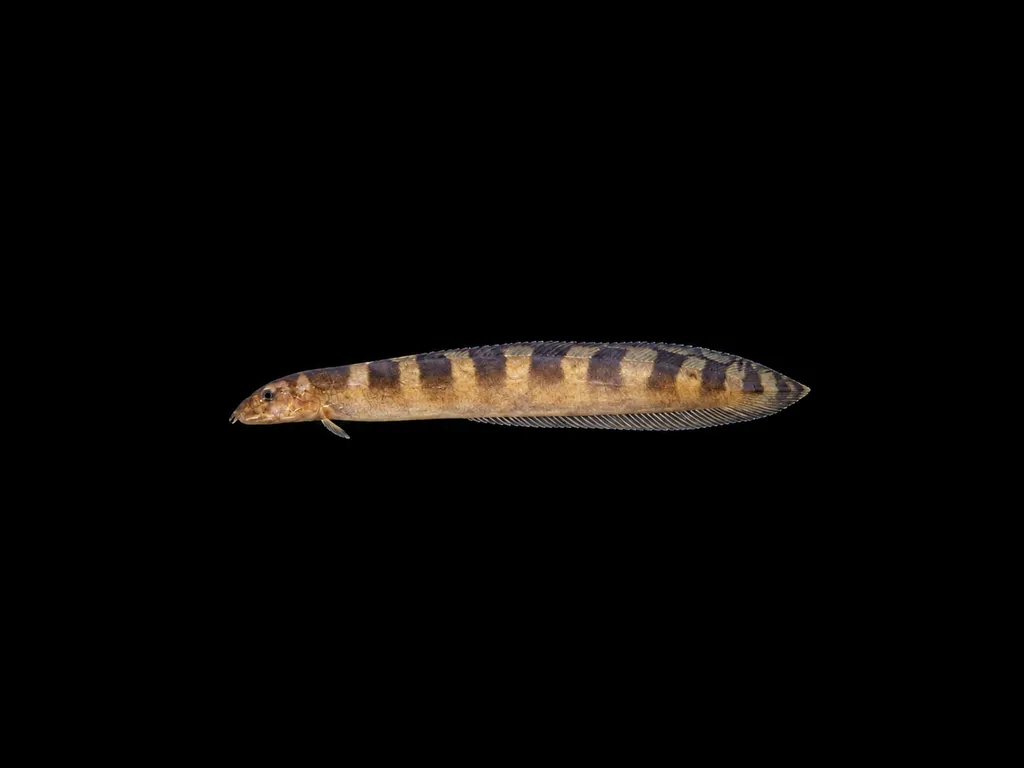 13.8 in (35 cm)79 gal (300 L)75–81°F (24–27°C)
Tanganyika striped spiny eel
Mastacembelus plagiostomus
13.8 in (35 cm) · 79 gal (300 L)
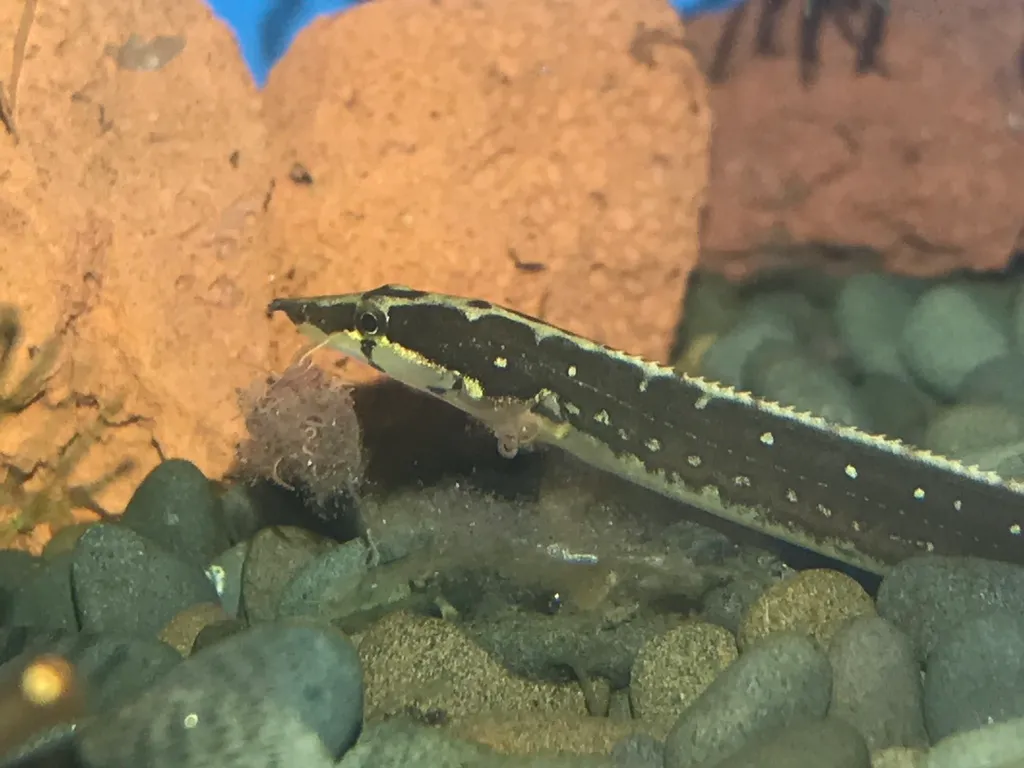 17.7 in (45 cm)106 gal (400 L)73–82°F (23–28°C)
Eyespot spiny eel
Mastacembelus notophthalmus
17.7 in (45 cm) · 106 gal (400 L)
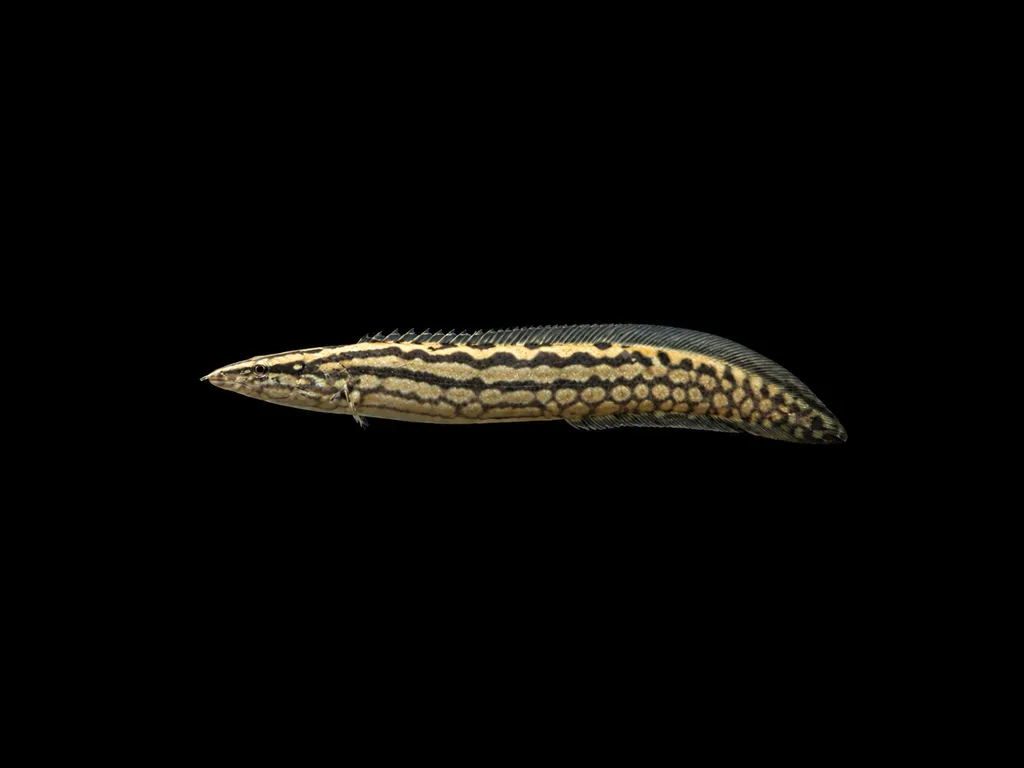 17.7 in (45 cm)106 gal (400 L)73–82°F (23–28°C)
Tin Win's spiny eel
Mastacembelus tinwini
17.7 in (45 cm) · 106 gal (400 L)
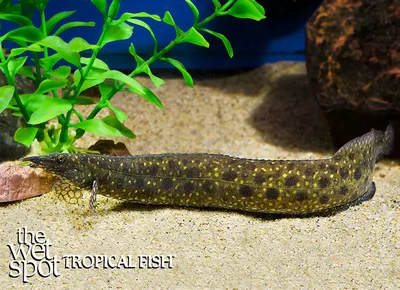 19.3 in (49 cm)106 gal (400 L)73–82°F (23–28°C)
White-spotted spiny eel
Mastacembelus alboguttatus
19.3 in (49 cm) · 106 gal (400 L)
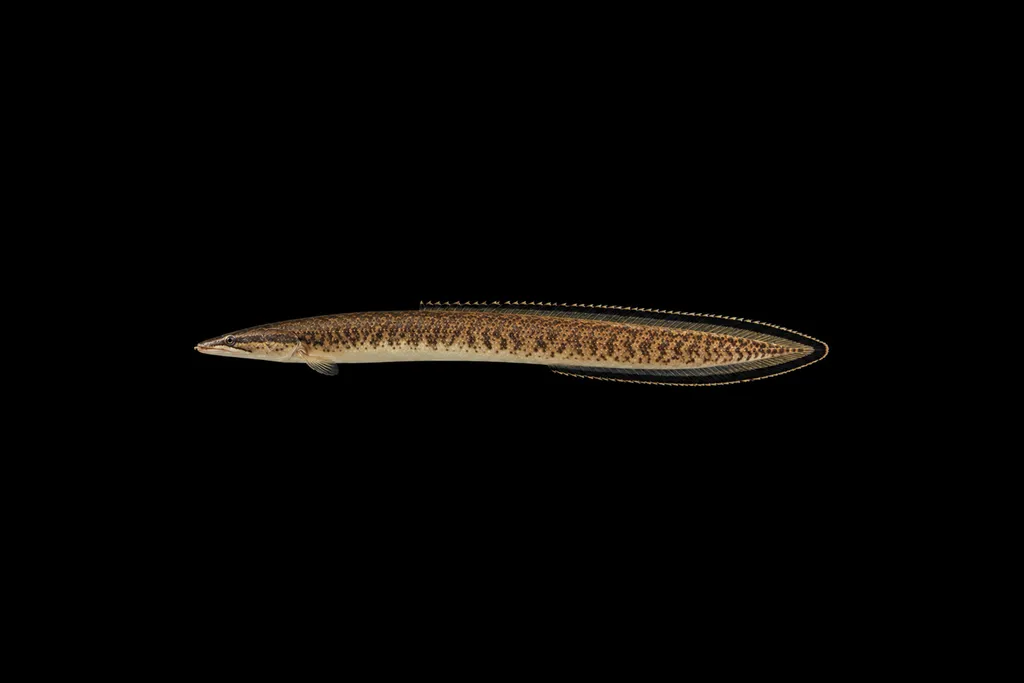 19.7 in (50 cm)106 gal (400 L)73–82°F (23–28°C)
Blackedge spiny eel
Mastacembelus nigromarginatus
19.7 in (50 cm) · 106 gal (400 L)
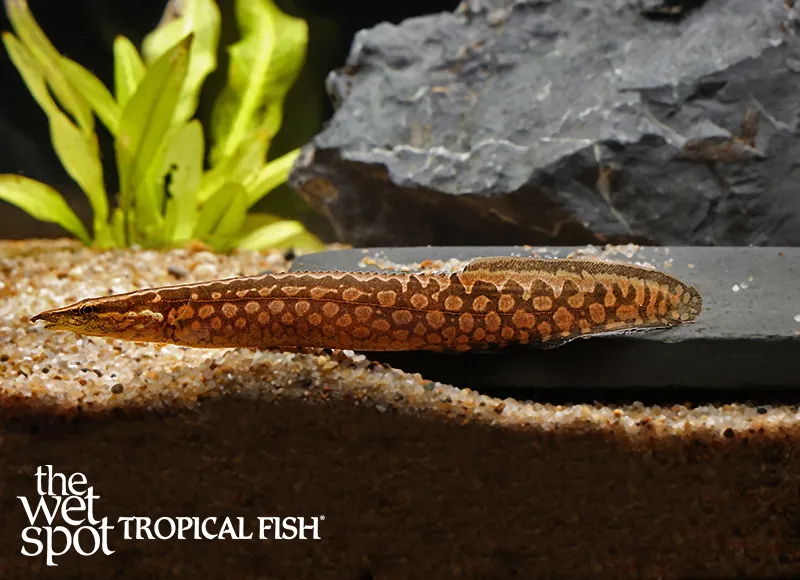 19.7 in (50 cm)119 gal (450 L)75–82°F (24–28°C)
Marbled spiny eel
Mastacembelus favus
19.7 in (50 cm) · 119 gal (450 L)