Jade betta
Betta iaspis
Also known as Betta sp. Jade, Iaspis betta
FreshwaterFish
Care at a glance
- Temperature
- 75–86°F
- 24–30°C
- pH
- 4.5–6.0
- Adult size
- 0.9 in
- 2.4 cm
- Minimum tank
- 8 gal
- 30 L
- Temperament
- Mostly peaceful
- Social behavior
- Solitary
- Tankmates
- With caution
- Swim level
- Middle
- Diet
- Carnivore
- Difficulty
- Difficult
- Breeding
- Bubble nester · Medium
- Rarity
- Rare
- Family
- Osphronemidae
- Origin
- Jambi, Sumatra
Overview
The jade betta is a very small, mostly peaceful betta from Sumatra that suits a quiet blackwater tank. It is a fish for experienced keepers.
Did you know
When its swamp dries out, the jade betta survives by burrowing into the moist mud under the dead leaves. It comes back to the surface and breeds again once the rains refill the forest.
Caring for the jade betta
Keep jade bettas as a pair in a small blackwater tank of at least 8 gal (30 L). Give them leaf litter, floating plants and almost no flow.
It needs very soft, acidic, tannin-stained water at 75 to 86°F (24 to 30°C) and a pH of 4.5 to 6.0. The jade betta is a delicate fish, and it does not forgive hard tap water.
Feed small live and frozen foods such as baby brine shrimp, daphnia and microworms. Keep the jade betta in a quiet species tank, or with tiny, peaceful soft-water fish such as Boraras.
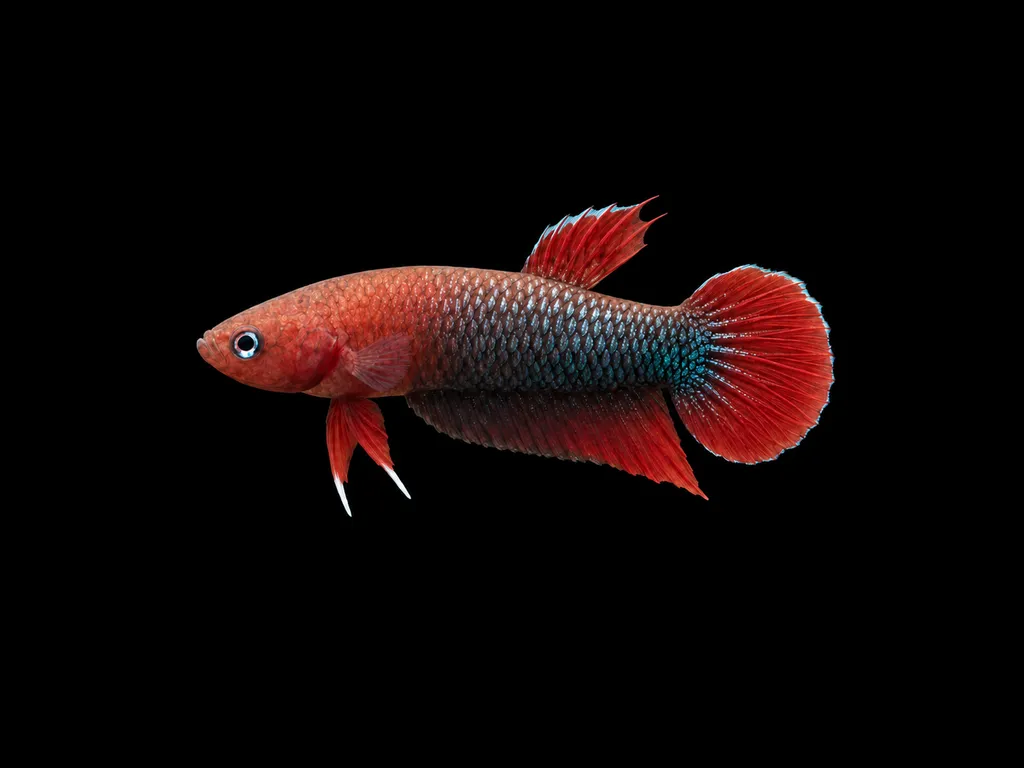
Males have a blackish body with a blue flush behind the vent. Their fins are red with bright blue margins, and the anal fin is black, patched with red. Males are territorial while breeding and build a bubble nest under leaves. Breeding them is moderately difficult.
Good to know
Betta iaspis belongs to the Betta coccina group of tiny blackwater fighters, in the family Osphronemidae. Ding and colleagues described it in 2025 from fish that had been in the trade since 2022 as Betta sp. Jade. Its name is taken from jasper, after the colors of the male. Its closest relative is B. mulyadii. The describers propose listing it as Critically Endangered, because irrigation for the neighboring oil palm plantation is making the dry spells longer.
In the wild
The jade betta comes from one small forest peat swamp in the Lagan area of Jambi, Sumatra. The swamp sits right beside a large oil palm plantation and partly dries out each year. In the dry season, the describers measured pH 5.0, total dissolved solids of 12 ppm and 29.8°C in the puddles that were left. It shared the swamp with Betta simorum, Boraras maculatus, Rasbora einthovenii and chocolate gouramis.
Common questions
What size tank does a jade betta need?
A jade betta needs at least 8 gal (30 L). It spends most of its time in the middle.
What temperature and pH does a jade betta need?
A jade betta is comfortable at 75–86°F (24–30°C) with a pH of 4.5–6.0.
What does a jade betta eat?
A jade betta eats small live and frozen foods, such as baby brine shrimp, daphnia and microworms.
How big does a jade betta get?
An adult jade betta reaches about 0.9 in (2.4 cm).
How can you tell a male jade betta from a female?
Males have a blackish body with a blue flush behind the vent. Their fins are red with bright blue margins, and the anal fin is black with red patches.
How does a jade betta breed?
Jade bettas are bubble nesters. Males turn territorial while breeding and build a bubble nest under leaves, and breeding them is moderately difficult.
Related species
 1.1 in (2.8 cm)11 gal (40 L)72–81°F (22–27°C)
Miniopinna betta
Betta miniopinna
1.1 in (2.8 cm) · 11 gal (40 L)
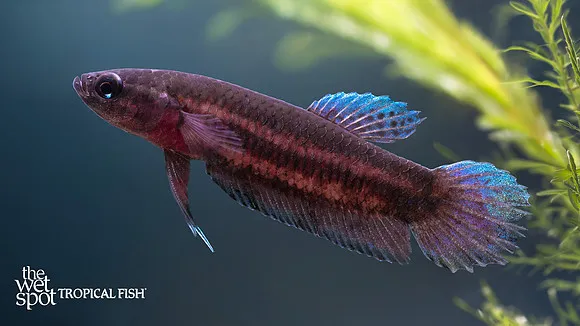
- 1.1 in (2.8 cm)8 gal (30 L)75–84°F (24–29°C)
Api api betta
Betta mulyadii
1.1 in (2.8 cm) · 8 gal (30 L)
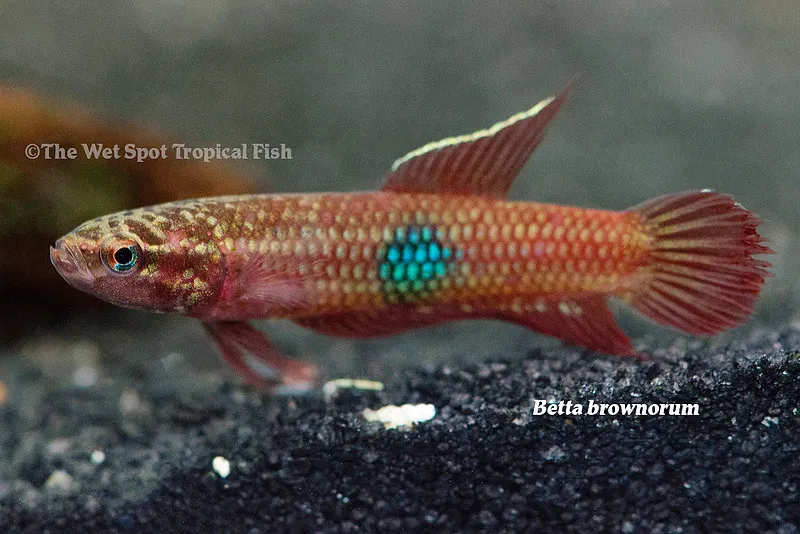 1.2 in (3 cm)11 gal (40 L)75–82°F (24–28°C)
Brown's betta
Betta brownorum
1.2 in (3 cm) · 11 gal (40 L)
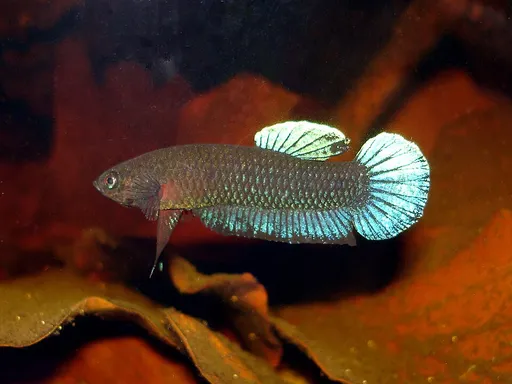 1.4 in (3.5 cm)11 gal (40 L)73–81°F (23–27°C)
Persephone betta
Betta persephone
1.4 in (3.5 cm) · 11 gal (40 L)
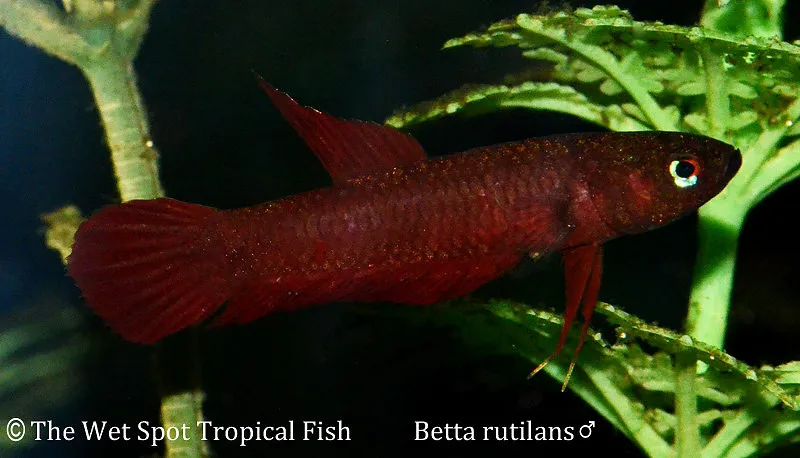 1.4 in (3.5 cm)11 gal (40 L)73–81°F (23–27°C)
Redcheek betta
Betta rutilans
1.4 in (3.5 cm) · 11 gal (40 L)
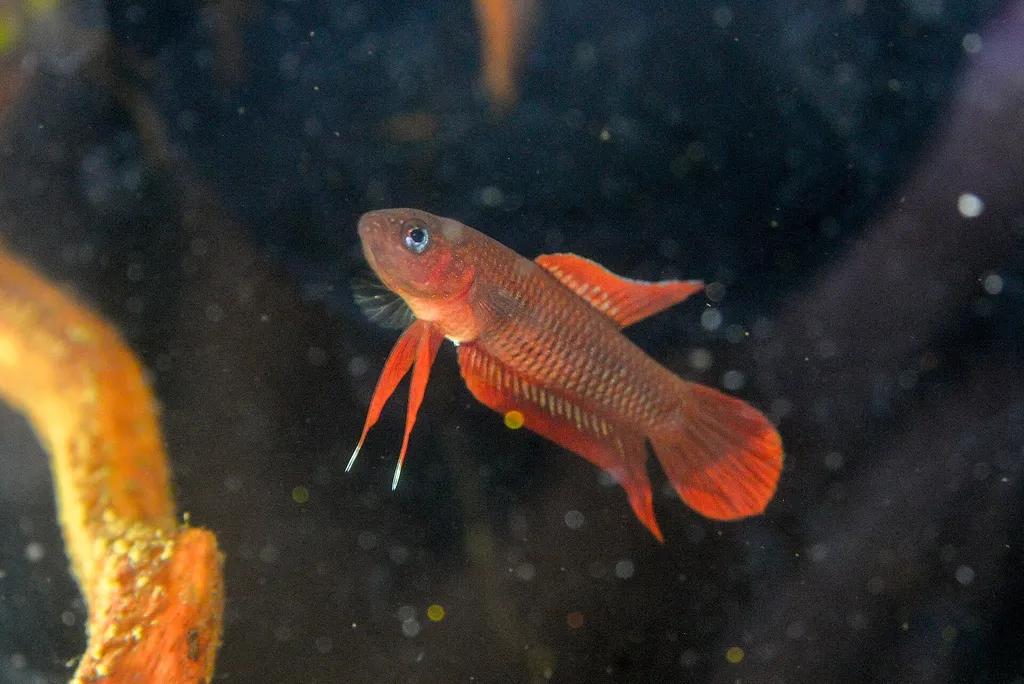 1.4 in (3.5 cm)11 gal (40 L)72–81°F (22–27°C)
Wine-red betta
Betta burdigala
1.4 in (3.5 cm) · 11 gal (40 L)