Hore's cichlid
Shuja horei
Also known as Ctenochromis horei
FreshwaterFish
Care at a glance
- Temperature
- 75–81°F
- 24–27°C
- pH
- 7.5–9.0
- Adult size
- 7.9 in
- 20 cm
- Minimum tank
- 79 gal
- 300 L
- Temperament
- Aggressive
- Social behavior
- Solitary
- Tankmates
- With caution
- Swim level
- Bottom
- Diet
- Omnivore
- Difficulty
- Medium
- Breeding
- Mouthbrooder · Medium
- Rarity
- Rare
- Family
- Cichlidae
- Origin
- Lake Tanganyika margins
Overview
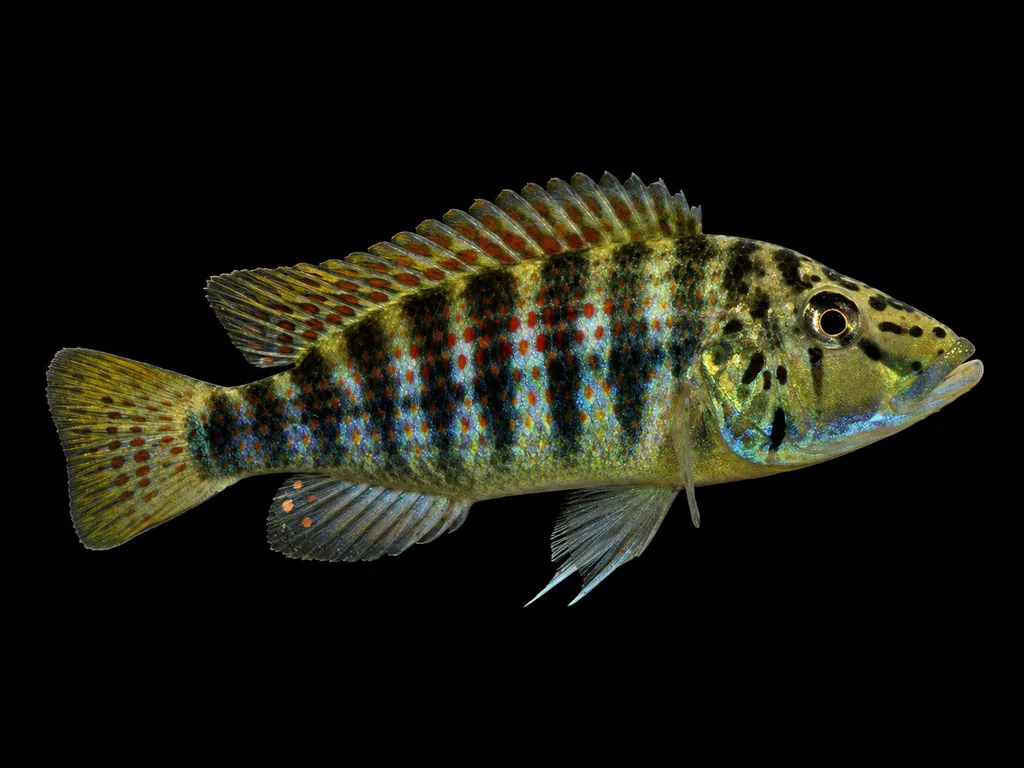
Hore's cichlid is a robust, boisterous haplochromine from Lake Tanganyika, more forgiving than the lake's rock specialists. It is pushy enough to need managing, and not a beginner's fish.
Did you know
Brooding female Hore's cichlids have been shown to adjust how long they shelter their young in the mouth. They match it to the danger around them, holding the fry longer when predators are near.
Caring for the Hore's cichlid
Give a Hore's cichlid a tank of at least 79 gal (300 L), with rock structure and open floor. Lay a sandy bottom with some rock and root cover, and add a few areas of planting or algae growth.
Keep the water hard and alkaline, at 75 to 81°F (24 to 27°C) and a pH of 7.5 to 9.0. It is an omnivore that becomes more predatory as it grows. Feed quality pellets and frozen or meaty foods.
Keep it singly or as one male and female pair, not a group of its own kind. A dominant male will not tolerate rivals. A displaying male defends a territory hard, so choose sturdy tank mates that can take the pressure. Leave out small or timid fish, and anything small enough to be eaten.
Males color up strongly when they display. The female is a mouthbrooder that carries the eggs and fry, and a dominant male guards a spawning female from rivals. Breeding it is moderately challenging.
Good to know
Shuja horei was long known as Ctenochromis horei, and it is a member of the family Cichlidae. A 2022 revision moved it into the newly created genus Shuja, named with the Swahili word for brave.
In the wild
Hore's cichlid is widespread around Lake Tanganyika. It favors shallow, weedy margins, river mouths and soft-bottomed bays rather than the open rock faces.
Common questions
What size tank does a Hore's cichlid need?
A Hore's cichlid needs at least 79 gal (300 L). It spends most of its time in the bottom.
What temperature and pH does a Hore's cichlid need?
A Hore's cichlid is comfortable at 75–81°F (24–27°C) with a pH of 7.5–9.0.
What does a Hore's cichlid eat?
A Hore's cichlid eats quality pellets and frozen or meaty foods. It is an omnivore that turns more predatory with age.
How big does a Hore's cichlid get?
An adult Hore's cichlid reaches about 7.9 in (20 cm).
How can you tell a male Hore's cichlid from a female?
Males color up strongly when they display.
How does a Hore's cichlid breed?
A Hore's cichlid is a maternal mouthbrooder, and the female carries the eggs and fry. A dominant male guards a spawning female from rivals, and breeding is moderately challenging.
Related species
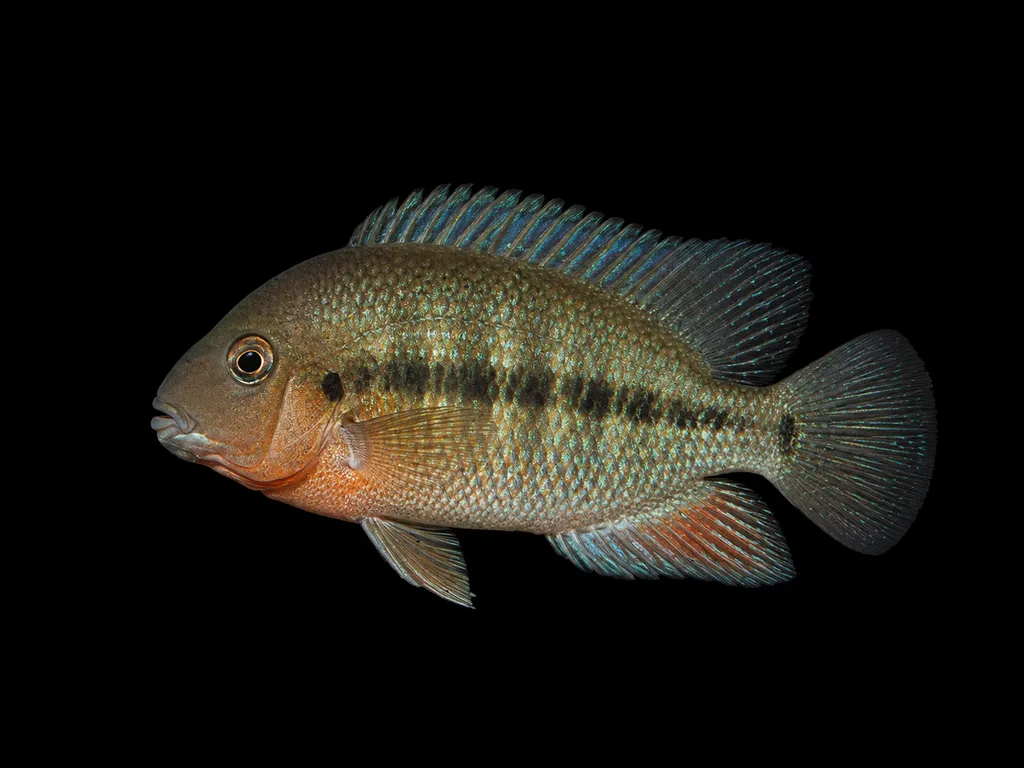 7.9 in (20 cm)119 gal (450 L)75–84°F (24–29°C)
Breidohr's vieja
Vieja breidohri
7.9 in (20 cm) · 119 gal (450 L)
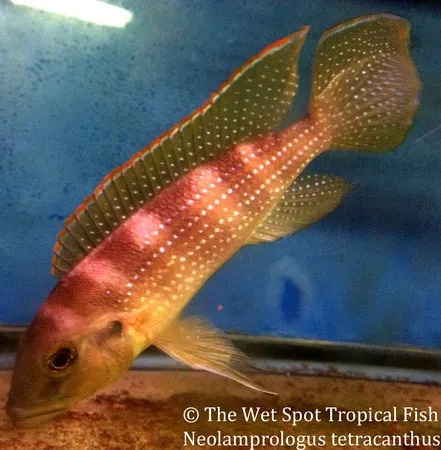 7.9 in (20 cm)79 gal (300 L)75–81°F (24–27°C)
Fourspine lamprologus
Neolamprologus tetracanthus
7.9 in (20 cm) · 79 gal (300 L)
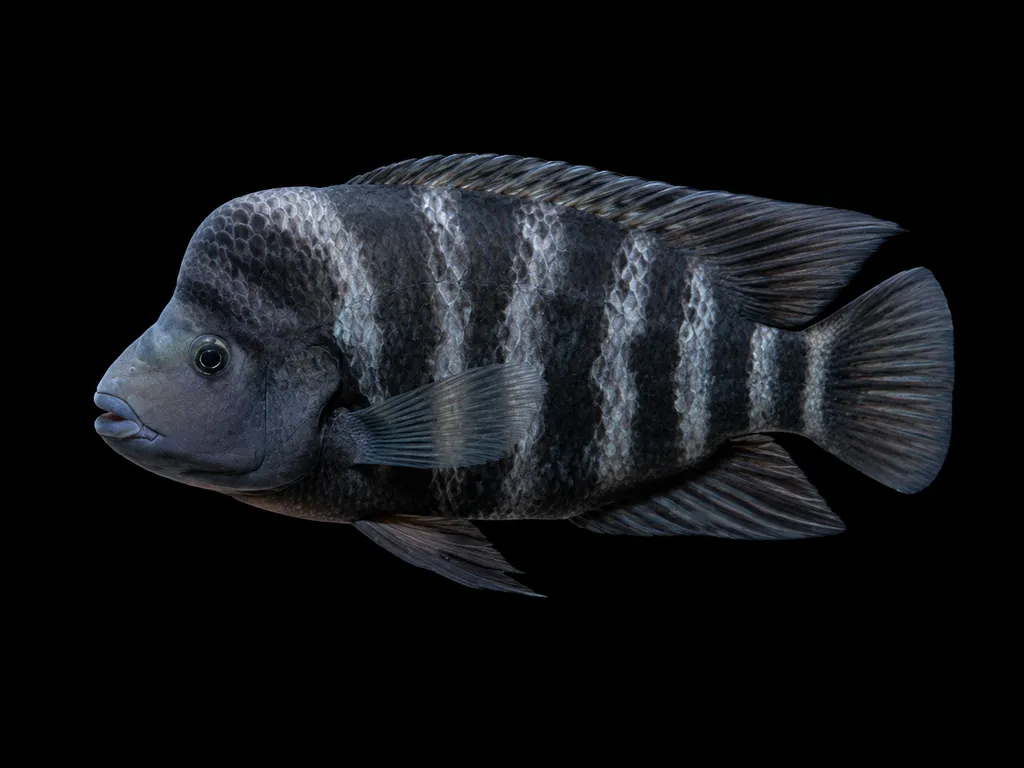 7.5 in (19 cm)119 gal (450 L)75–84°F (24–29°C)
Arrow midas cichlid
Amphilophus sagittae
7.5 in (19 cm) · 119 gal (450 L)
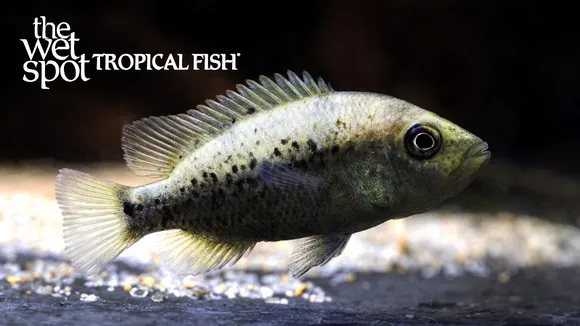 8.7 in (22 cm)79 gal (300 L)75–84°F (24–29°C)
Barton's cichlid
Herichthys bartoni
8.7 in (22 cm) · 79 gal (300 L)
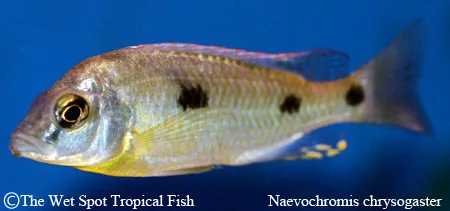 7.1 in (18 cm)119 gal (450 L)75–81°F (24–27°C)
Goldbelly naevochromis
Naevochromis chrysogaster
7.1 in (18 cm) · 119 gal (450 L)
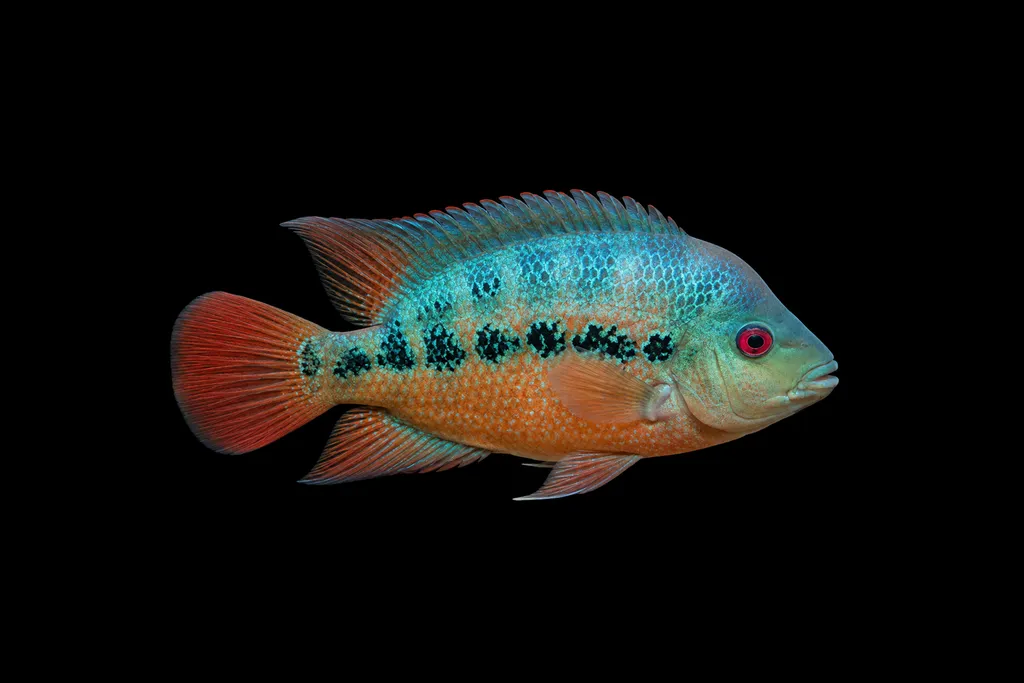 7.1 in (18 cm)106 gal (400 L)75–84°F (24–29°C)
Lyons' cichlid
Amphilophus lyonsi
7.1 in (18 cm) · 106 gal (400 L)