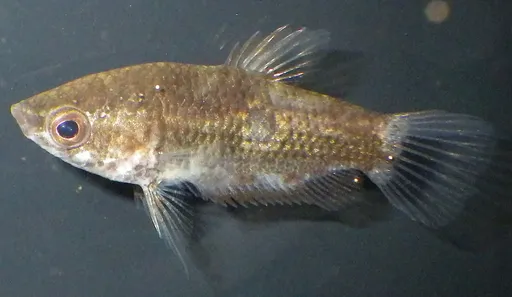
Eyespot gourami
Parasphaerichthys ocellatus
Also known as False chocolate gourami, Burmese chocolate gourami, Ocellated gourami, Burmese Mini Chocolate Gourami
FreshwaterFish
Care at a glance
- Temperature
- 64–77°F
- 18–25°C
- pH
- 6.5–7.5
- Adult size
- 1.4 in
- 3.5 cm
- Minimum tank
- 12 gal
- 45 L
- Temperament
- Peaceful
- Social behavior
- Social
- Tankmates
- With caution
- Swim level
- Middle
- Difficulty
- Difficult
- Breeding
- Hard
- Rarity
- Very rare
- Family
- Osphronemidae
- Origin
- Upper Ayeyarwady basin of northern Myanmar, including Lake Indawgyi, in cool, still, vegetated waters.
Overview
Keep a group of six or more in a planted 45 litre tank at 18 to 25 C with soft to neutral water around pH 6.5 to 7.5. Feed small live and frozen foods such as baby brine shrimp, daphnia, and micro worm, as this picky micropredator often ignores dried food. It is easily intimidated, so keep it alone or with equally calm, small fish and no fast feeders. Cooler room-temperature water suits it better than tropical heat.
In the wild
Found in still and slow waters of northern Myanmar, including swamps and the margins of Lake Indawgyi, that are heavily planted. Being in the north, these waters can run cool, so it experiences subtropical rather than tropical temperatures. It is a slow, retiring fish that keeps to cover. It looks like a small chocolate gourami but sits in a separate genus.
Good to know
Parasphaerichthys ocellatus was described by Prashad and Mukerji in 1929 and belongs to the family Osphronemidae. Despite resembling the chocolate gouramis, it is a bubble-nest builder rather than a mouthbrooder. It stays tiny at around 3 cm and carries a dark eyespot near the base of the tail.
Did you know
It is one of the few chocolate gourami relatives that builds a bubble nest instead of brooding its eggs in the mouth.
Common questions
What size tank does an Eyespot gourami need?
An Eyespot gourami needs at least 12 gal (45 L). It spends most of its time in the middle.
What temperature and pH does an Eyespot gourami need?
An Eyespot gourami is comfortable at 64–77°F (18–25°C) with a pH of 6.5–7.5.
How big does an Eyespot gourami get?
An adult Eyespot gourami reaches about 1.4 in (3.5 cm).
Related species
 1 in (2.5 cm)11 gal (40 L)68–79°F (20–26°C)
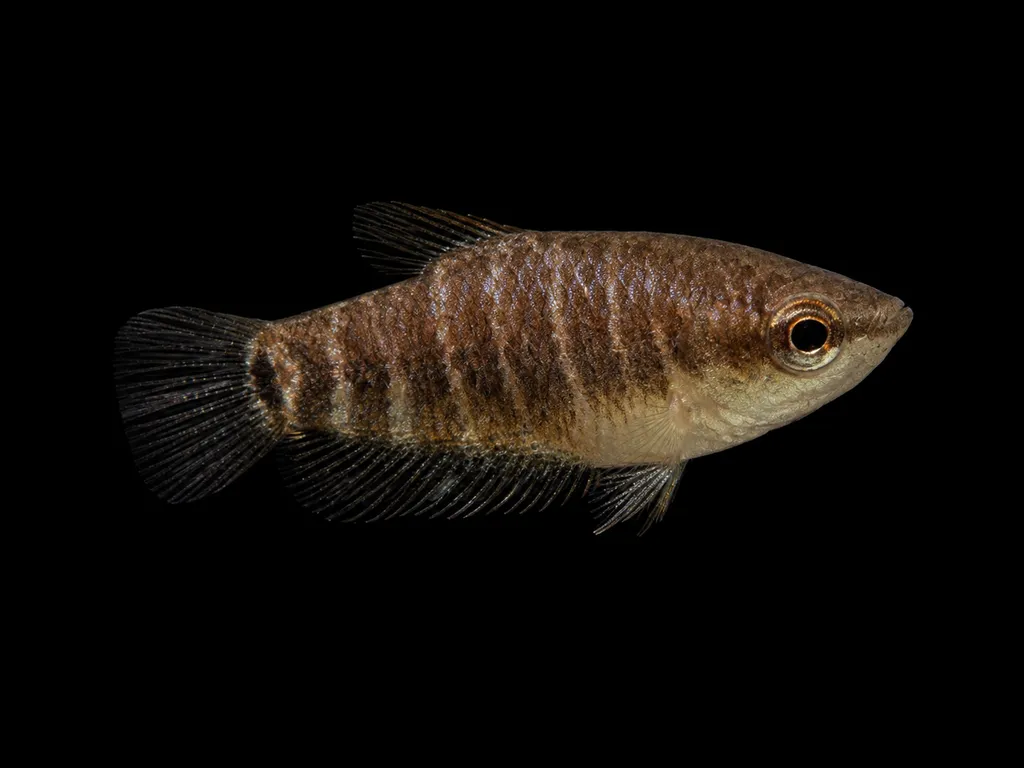
False chocolate gourami
Parasphaerichthys lineatus
1 in (2.5 cm) · 11 gal (40 L)
 1.5 in (3.7 cm)5 gal (20 L)72–81°F (22–27°C)
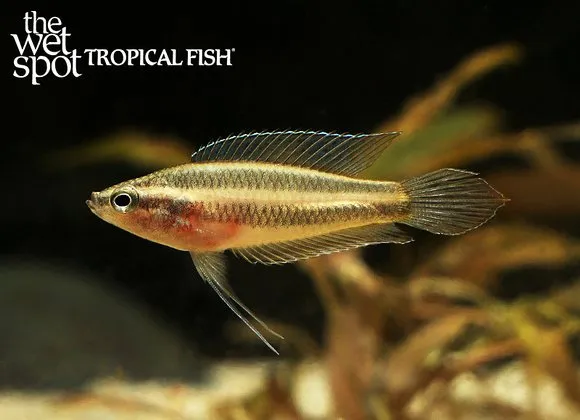
Swamp licorice gourami
Parosphromenus paludicola
1.5 in (3.7 cm) · 5 gal (20 L)
 1.6 in (4 cm)11 gal (40 L)73–82°F (23–28°C)
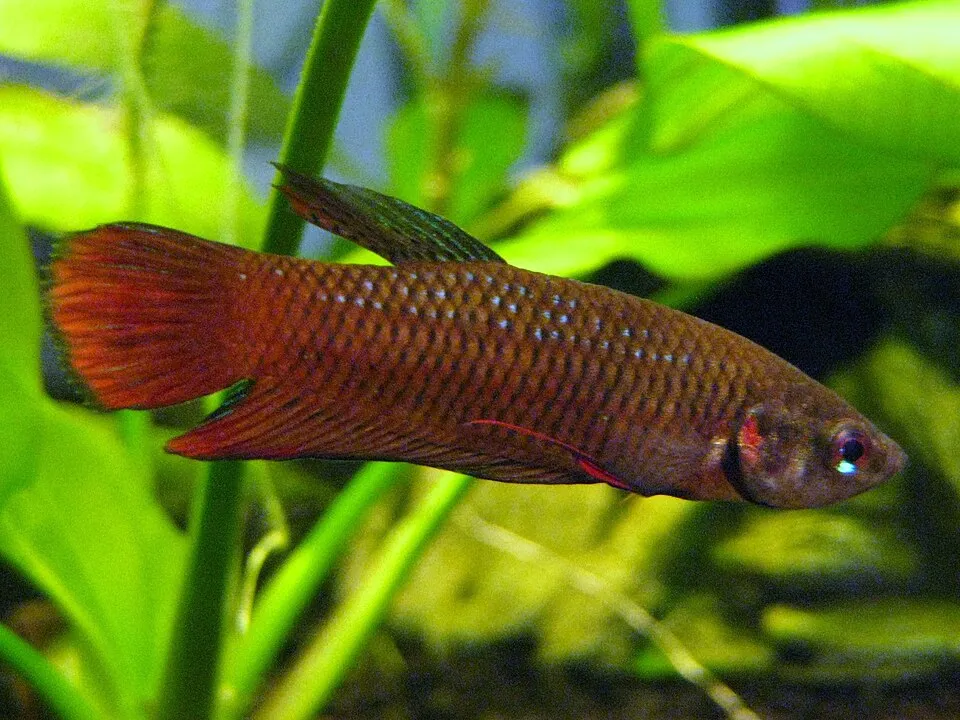
Chukai betta
Betta tussyae
1.6 in (4 cm) · 11 gal (40 L)
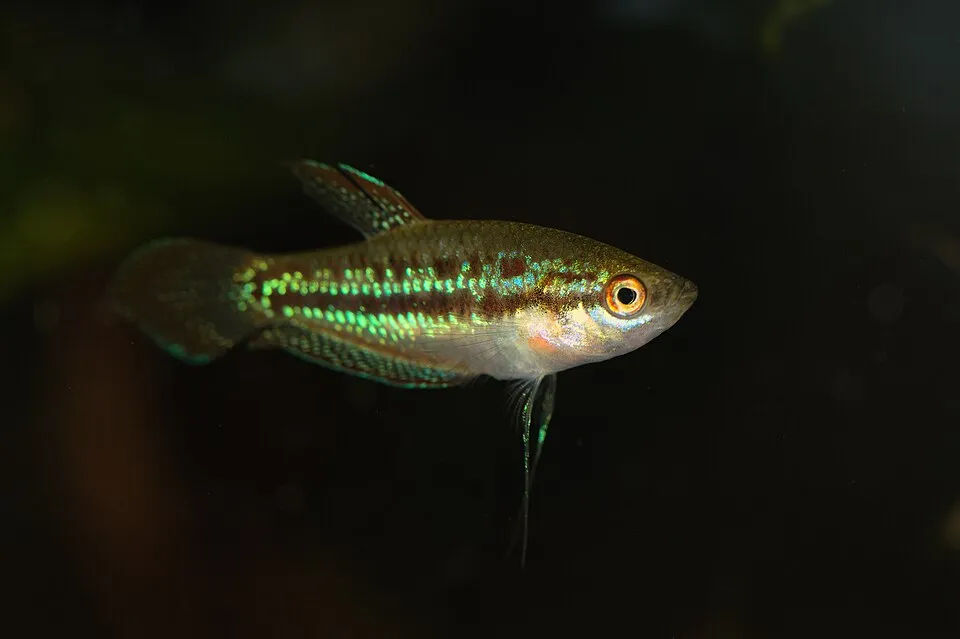 1.6 in (4 cm)15 gal (55 L)72–82°F (22–28°C)
Pygmy gourami
Trichopsis pumila
1.6 in (4 cm) · 15 gal (55 L)
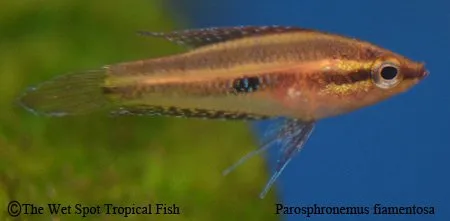 1.6 in (4 cm)5 gal (20 L)72–81°F (22–27°C)
Spadetail licorice gourami
Parosphromenus filamentosus
1.6 in (4 cm) · 5 gal (20 L)
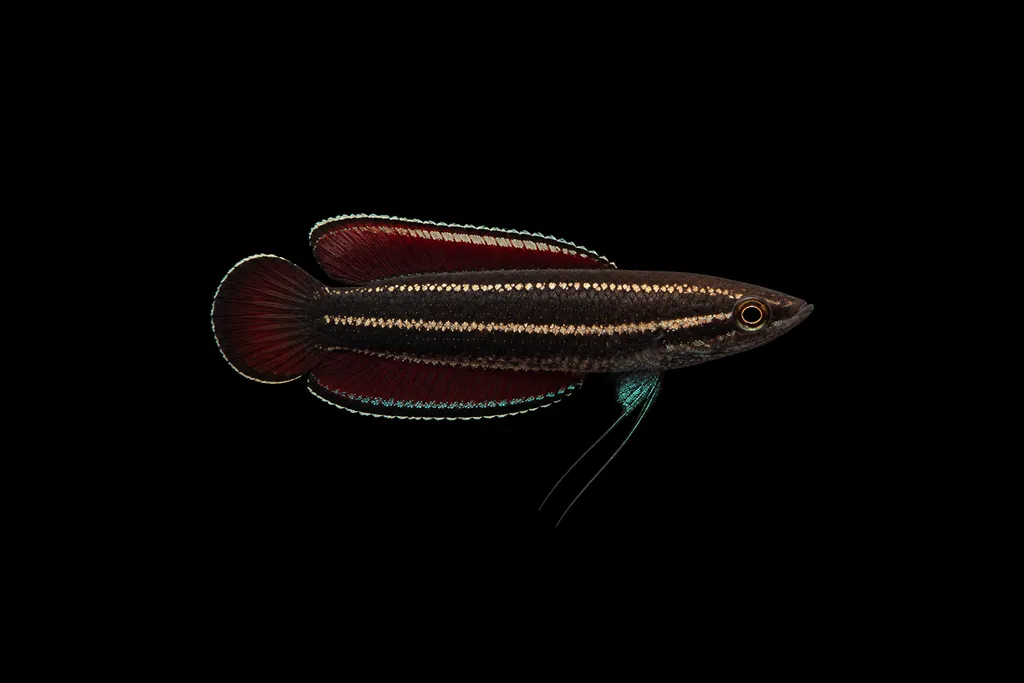 1.1 in (2.8 cm)5 gal (20 L)72–81°F (22–27°C)
Pahu licorice gourami
Parosphromenus pahuensis
1.1 in (2.8 cm) · 5 gal (20 L)