Breviobesa betta
Betta breviobesa
Also known as Betta breviobesus
FreshwaterFish
Care at a glance
- Temperature
- 73–82°F
- 23–28°C
- pH
- 6.0–7.0
- Adult size
- 2.6 in
- 6.5 cm
- Minimum tank
- 16 gal
- 60 L
- Temperament
- Peaceful
- Social behavior
- Social
- Tankmates
- With caution
- Swim level
- Middle
- Difficulty
- Medium
- Breeding
- Mouthbrooder · Medium
- Rarity
- Very rare
- Family
- Osphronemidae
- Origin
- Kapuas basin, West Kalimantan, Borneo
Overview
The Breviobesa betta is a peaceful mouthbrooding betta for a planted tank with plenty of cover. It suits a keeper with a little experience.
Did you know
Part of the Breviobesa betta's type series was never netted by scientists at all. Villagers had caught the fish in a trap after heavy rains and were about to use them as bait when Maurice Kottelat obtained them. Those bait fish became paratypes when the species was described in 1998.
Caring for the Breviobesa betta
Keep a Breviobesa betta as a pair or a small group in 16 gal (60 L) or more, with plenty of cover. Give it a planted tank with sand, driftwood, leaf litter and dim light. Filter gently and fit a tight lid.
Keep the water soft, at 73 to 82°F (23 to 28°C) and a pH of 6.0 to 7.0. It is tolerant, so long as the tank is clean and well filtered. Feed live and frozen bloodworm, brine shrimp and daphnia, with dried food once the fish accepts it.
The Breviobesa betta is peaceful and content in a group, and it uses the middle of the water. Males flare at each other but rarely do damage. Calm, small tank mates are fine, but shrimp are food.
It is a mouthbrooder, and the male broods for around 14 days. Breeding is moderately difficult.
Good to know
The Breviobesa betta belongs to the Betta pugnax group of the family Osphronemidae. Tan and Kottelat described it in 1998 as Betta breviobesus. The current spelling follows Eschmeyer's Catalog of Fishes, which corrected the ending to agree with the feminine genus. The name joins the Latin brevis and obesus, short and fat, for its stocky, thickset body. It has a deep body, a smallish head, long pelvic fins, no bars across the tail, and dark edges to the anal and caudal fins. The IUCN lists it as Vulnerable.
In the wild
The Breviobesa betta comes from the Kapuas basin of West Kalimantan, Borneo. The holotype came from a stream near Tajan, east of Pontianak. Most other specimens were taken within 50 km of Putussibau in the upper basin. Tan and Kottelat found it mainly in small forest streams with slightly acidic water of pH 6 to 7. Part of the type series came from the murky mouth of a stream 2 to 3 m deep after heavy rain.
Common questions
What size tank does a Breviobesa betta need?
A Breviobesa betta needs at least 16 gal (60 L). It spends most of its time in the middle.
What temperature and pH does a Breviobesa betta need?
A Breviobesa betta is comfortable at 73–82°F (23–28°C) with a pH of 6.0–7.0.
What does a Breviobesa betta eat?
A Breviobesa betta eats live and frozen bloodworm, brine shrimp and daphnia. Once it accepts dried food, that can go in the mix as well.
How big does a Breviobesa betta get?
An adult Breviobesa betta reaches about 2.6 in (6.5 cm).
How does a Breviobesa betta breed?
A Breviobesa betta is a mouthbrooder, and the male broods for around 14 days. Breeding it is moderately difficult.
Related species
- 2.6 in (6.6 cm)20 gal (75 L)72–82°F (22–28°C)
Midas betta
Betta midas
2.6 in (6.6 cm) · 20 gal (75 L)
- 2.7 in (6.9 cm)20 gal (75 L)72–81°F (22–27°C)
Obscura betta
Betta obscura
2.7 in (6.9 cm) · 20 gal (75 L)
- 2.4 in (6.1 cm)16 gal (60 L)72–81°F (22–27°C)
Lehi betta
Betta lehi
2.4 in (6.1 cm) · 16 gal (60 L)
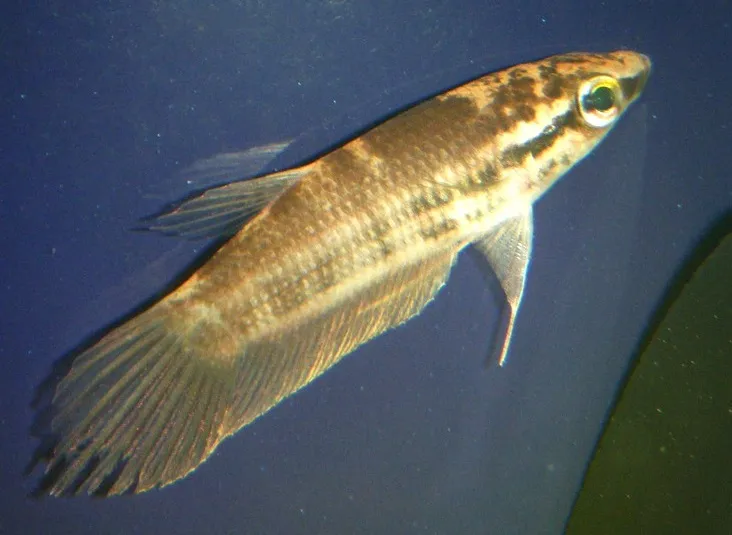 2.8 in (7 cm)16 gal (60 L)72–82°F (22–28°C)
Pugnax betta
Betta pugnax
2.8 in (7 cm) · 16 gal (60 L)
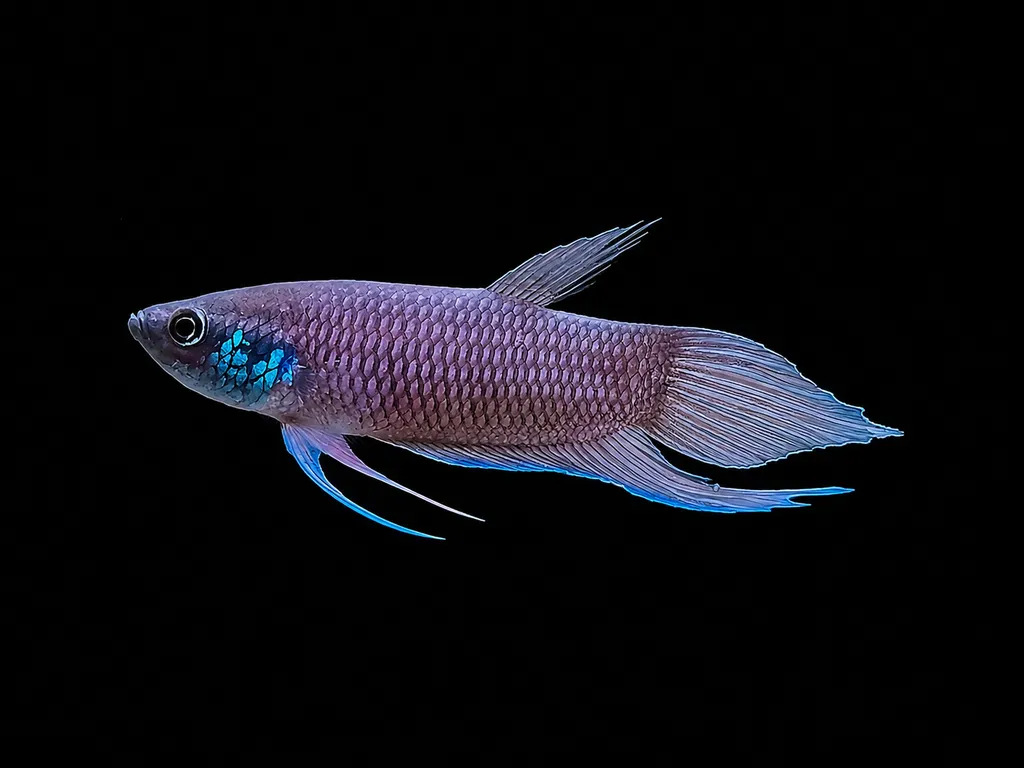 2.8 in (7 cm)26 gal (100 L)72–81°F (22–27°C)
Raja betta
Betta raja
2.8 in (7 cm) · 26 gal (100 L)
- 2.8 in (7 cm)20 gal (75 L)72–81°F (22–27°C)
Spilotogena betta
Betta spilotogena
2.8 in (7 cm) · 20 gal (75 L)