Persicaria hydropiper
Also known as Polygonum hydropiper, Water pepper, Marshpepper knotweed
FreshwaterStemCuttings
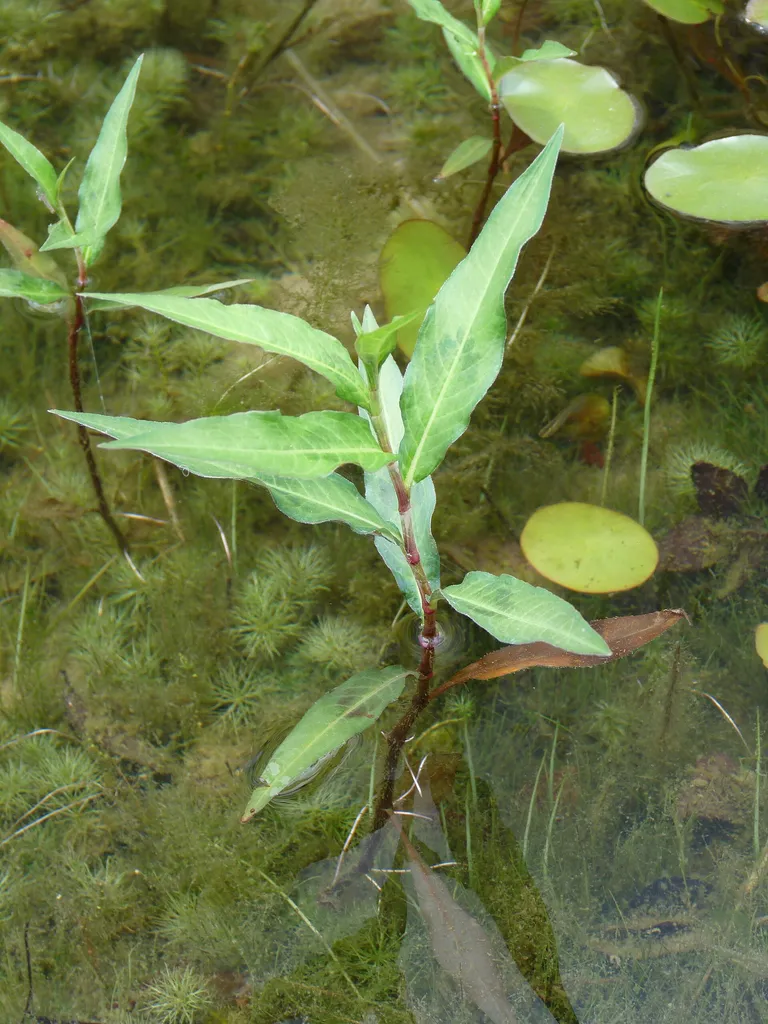
Care at a glance
- Light
- Medium light
- CO2
- CO₂ beneficial
- Temperature
- 64–79°F
- 18–26°C
- Max height
- 11.8 in
- 30 cm
- Growth rate
- Fast
- Placement
- Midground
- Type
- Stem
- pH
- 6.0–7.5
- Spread
- 3.1 in (8 cm)
- Nutrient uptake
- Root + water column
- Growth region
- Submersed or emersed
- Difficulty
- Medium
- Family
- Polygonaceae
- Origin
- Temperate Europe, Asia, North America and Australia
Overview
Persicaria hydropiper is a fast-growing stem plant for the midground that switches between two looks. Emersed in a paludarium it grows green and magenta, while submersed leaves turn softer and narrower in green to pink. It is of medium difficulty.
Did you know
In Japan, Persicaria hydropiper is tade, a culinary herb. Its peppery red seedlings, called benitade, are the tiny sprout garnish served beside sashimi. The same bite is why grazing animals leave the wild plant alone.
Caring for Persicaria hydropiper
Strip the lower leaves and plant the bare stems a few centimeters apart in a rich substrate. Nursery stock is grown emersed, so the emersed leaves drop as underwater ones replace them. That looks alarming but is normal.
Persicaria hydropiper grows without injected CO2, and under medium light it stays green. Strong light, CO2 and iron-rich dosing pull out the pink and red. It feeds through its roots and its leaves, so use root tabs along with a liquid fertilizer. Keep it at 64 to 79°F (18 to 26°C).
Once settled it grows quickly, so top it and replant the tops to keep the group dense. Its natural home is the wet margin of a riparium or bog planter, where it is close to foolproof.
Good to know
Persicaria hydropiper is a knotweed in the family Polygonaceae. It was long known as Polygonum hydropiper, before that genus was split. The species name means water pepper, after the sharp, peppery taste of the leaves, which comes from the compound polygodial. It has the family's jointed stems, with sheathing stipules at each node, and slender, lance-shaped leaves.
In the wild
Persicaria hydropiper is a widespread annual of damp ground across temperate Europe, Asia, North America and Australia. It grows on muddy banks, in ditches and at the shallow edges of ponds and streams. It is an amphibious marginal rather than a true aquatic. Wild plants stand emersed with their feet wet, and only the lower stems spend time underwater.
Common questions
Does Persicaria hydropiper need to be planted in the substrate?
Yes. Strip the leaves from the lower part of each stem, then push the stems into the substrate one at a time, a little apart.
Does Persicaria hydropiper need CO2?
No, but it helps. Persicaria hydropiper can grow without injected CO2, and added CO2 makes it grow faster.
How much light does Persicaria hydropiper need?
Persicaria hydropiper wants medium light. A light sold for planted tanks covers it.
Does Persicaria hydropiper need root tabs?
They help. Persicaria hydropiper takes nutrients through both its roots and its leaves. Root tabs near its roots and a liquid fertilizer cover both.
How do you propagate Persicaria hydropiper?
Persicaria hydropiper propagates by cuttings. Cut off the top of a stem and replant it, and the stump left behind grows new shoots.
How tall does Persicaria hydropiper grow?
Persicaria hydropiper grows to about 11.8 in (30 cm) tall. It grows fast, so expect to trim it often.
Related plants
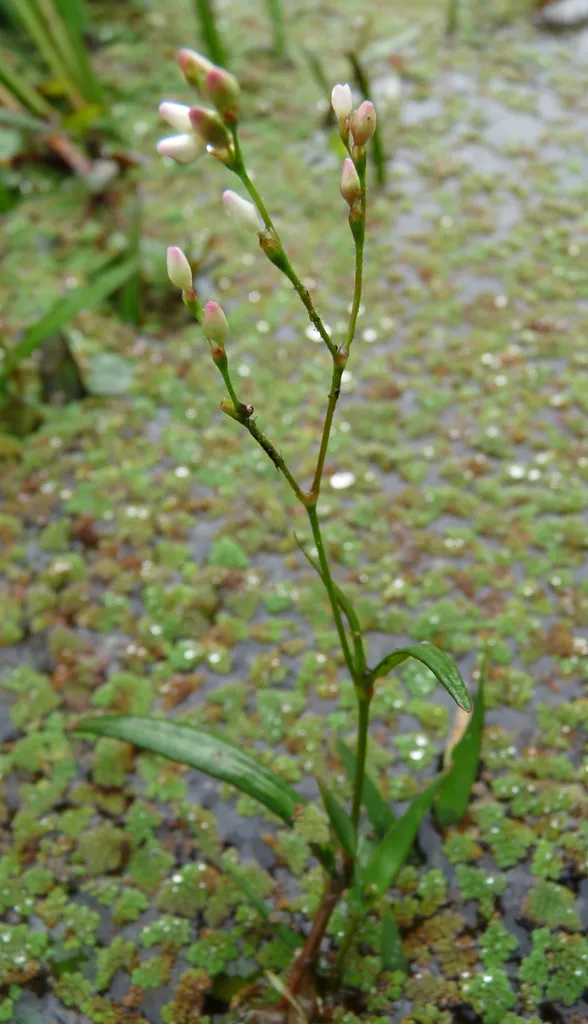 Medium lightMidground13.8 in (35 cm)
Persicaria praetermissa
Medium light · Midground
- High lightBackground15.7 in (40 cm)
Persicaria kawagoeanum
Persicaria sp. 'Kawagoeanum'
High light · Background
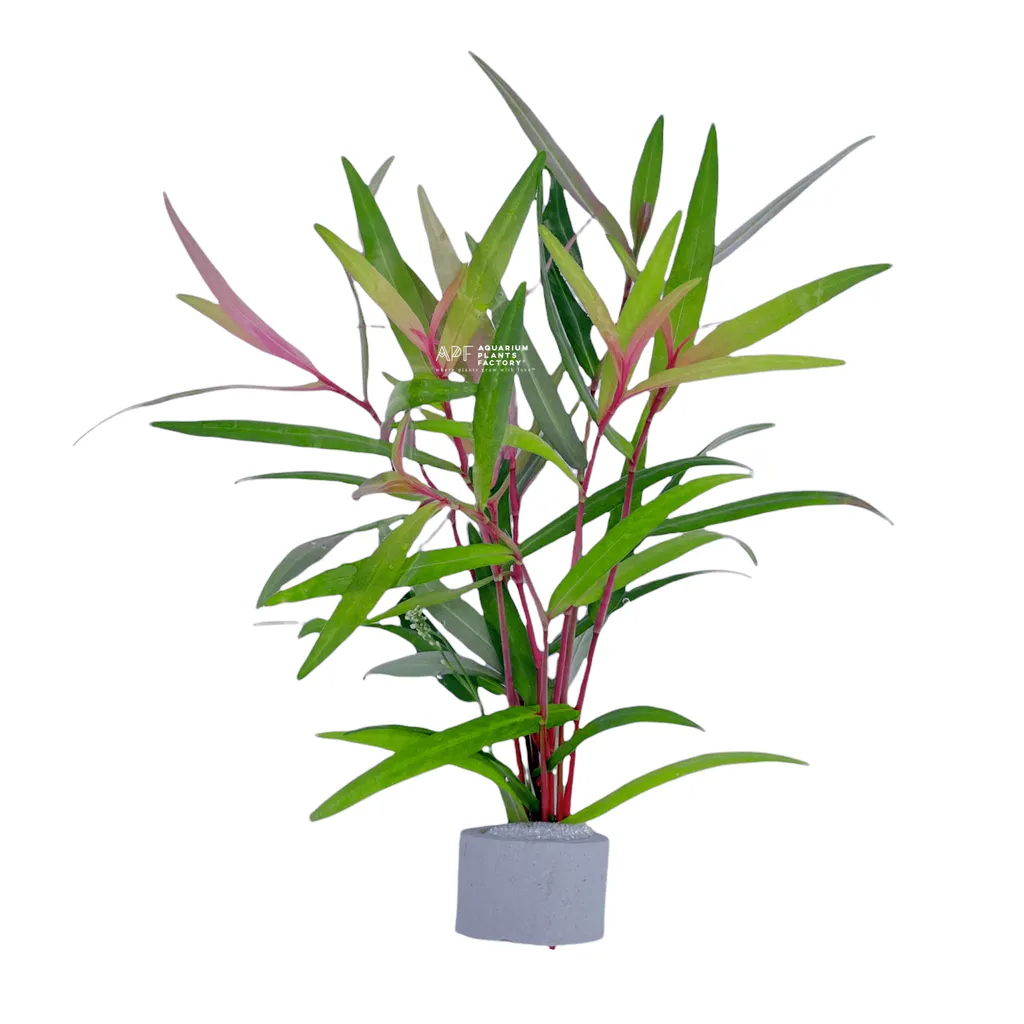 High lightBackground19.7 in (50 cm)
Persicaria Sao Paulo
Persicaria sp. 'Sao Paulo'
High light · Background
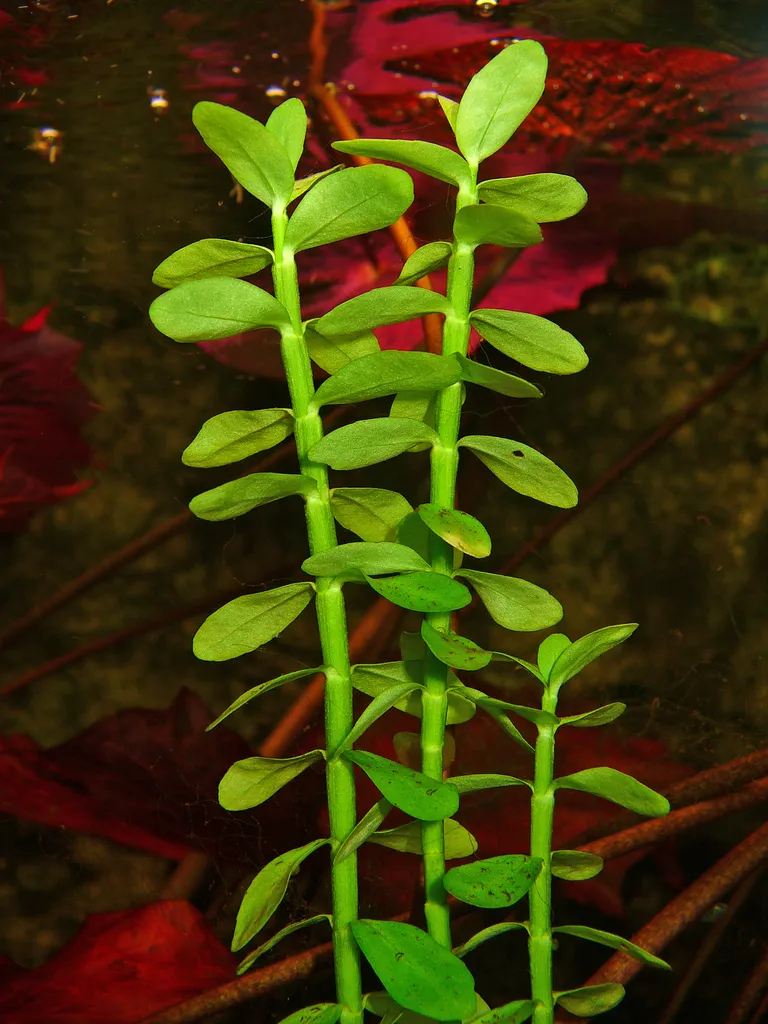 High lightMidground11.8 in (30 cm)
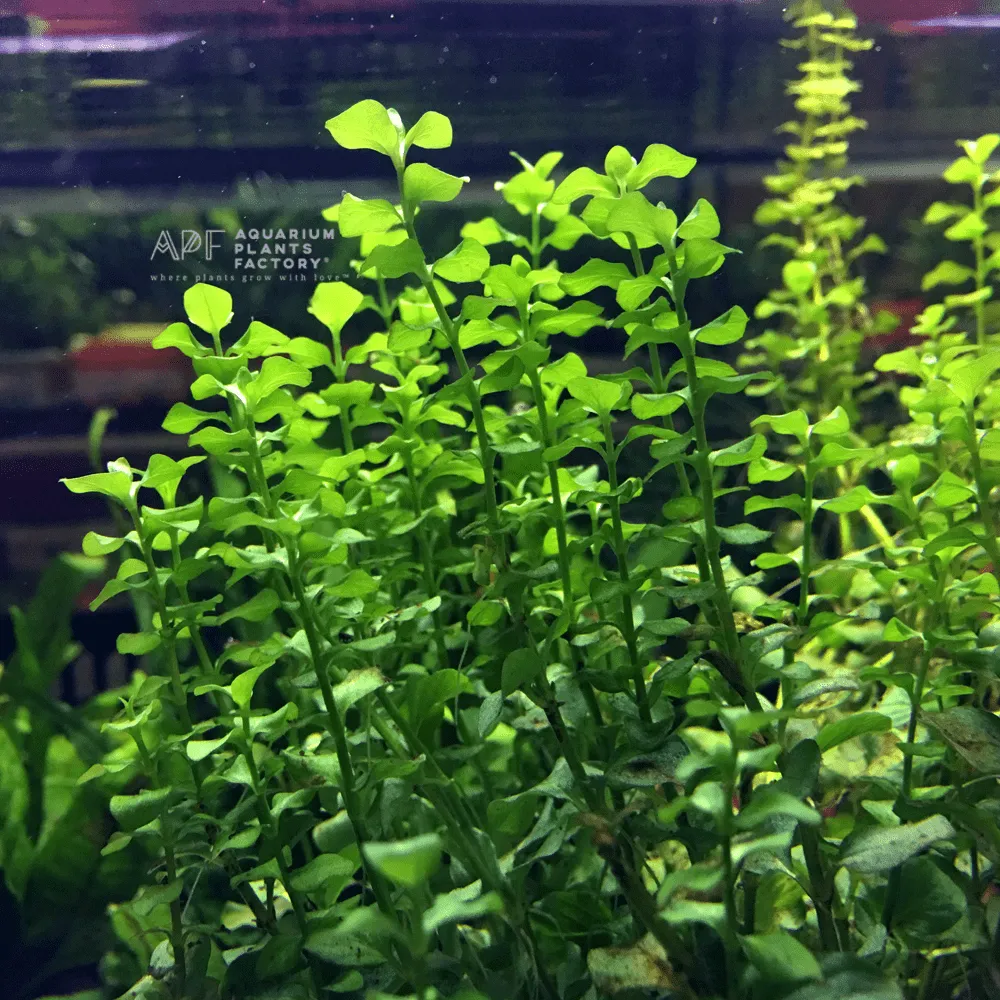
Bacopa madagascariensis
High light · Midground
 Medium lightMidground11.8 in (30 cm)
Creeping jenny
Lysimachia nummularia
Medium light · Midground
 Medium lightMidground11.8 in (30 cm)
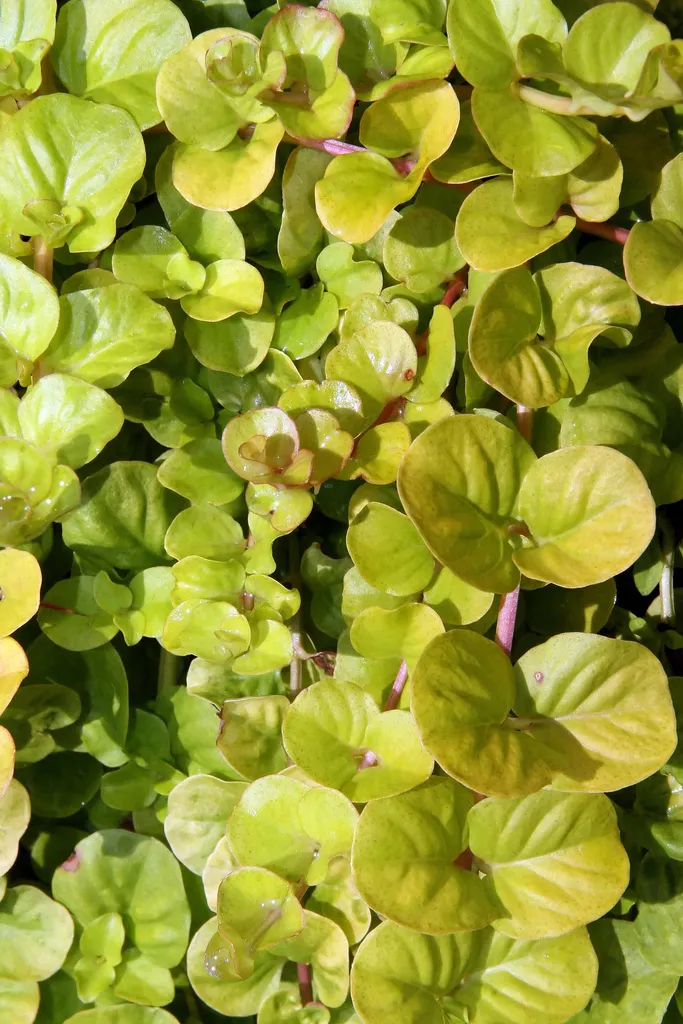
Creeping jenny Aurea
Lysimachia nummularia 'Aurea'
Medium light · Midground