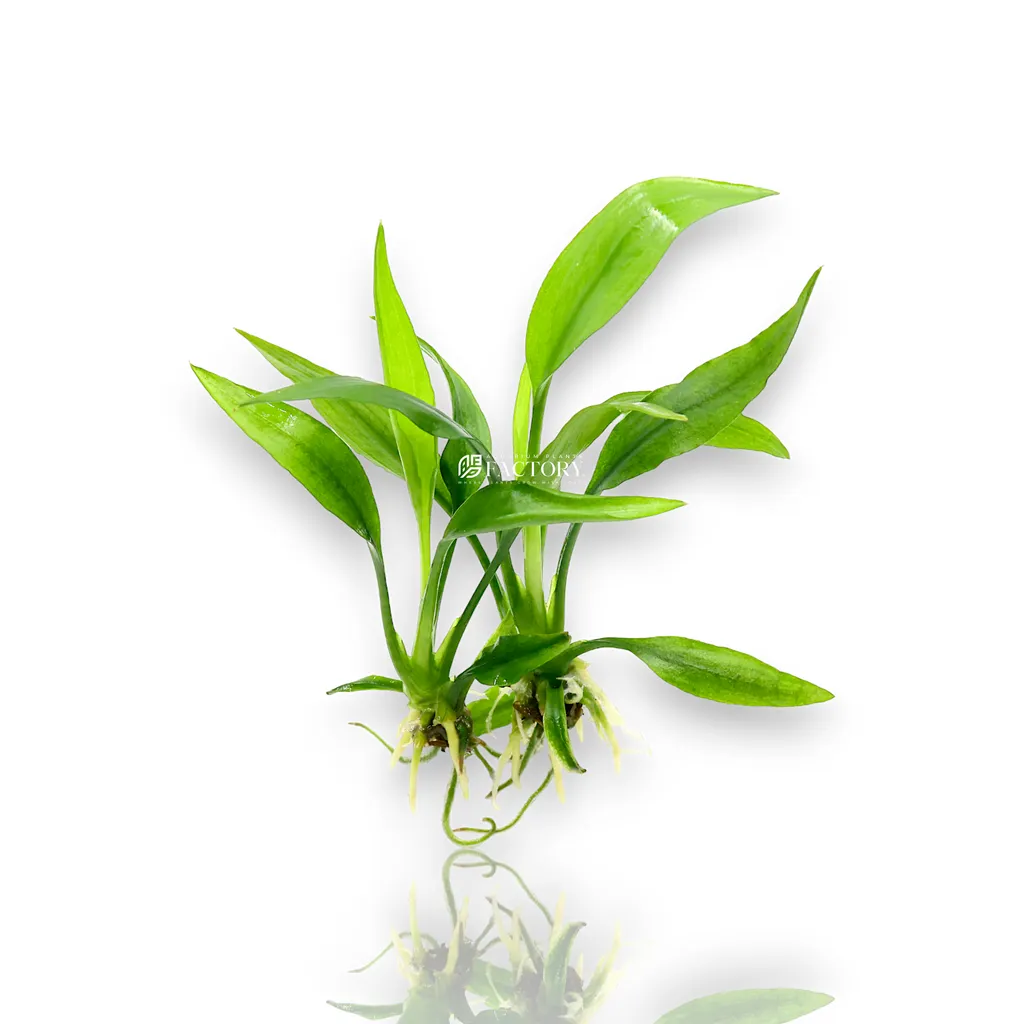
Lagenandra ovata
Also known as Arum ovatum, Cryptocoryne ovata
FreshwaterRhizomeRhizome divisionSide shoots
Care at a glance
- Light
- Medium light
- CO2
- CO₂ beneficial
- Temperature
- 72–82°F
- 22–28°C
- Max height
- 19.7 in
- 50 cm
- Growth rate
- Slow
- Placement
- Background
- Type
- Rhizome
- pH
- 6.0–7.5
- Hardness
- 0–18 dGH
- Spread
- 15.7 in (40 cm)
- Nutrient uptake
- Root + water column
- Growth region
- Submersed or emersed
- Difficulty
- Medium
- Family
- Araceae
- Origin
- Sri Lanka and southern India
Overview
A large, slow rhizome plant best used as a background specimen in bigger tanks or grown emersed in a paludarium. It wants medium light (strong light tends to invite algae on the slow leaves), stable water and a nutrient-rich, fine substrate for the rhizome; CO2 is optional but speeds its otherwise leisurely growth. Divide the rhizome or separate rooted plantlets to propagate, and give it time to settle rather than moving it around.
In the wild
A robust aroid from the wetlands, marshes and riverbanks of Sri Lanka and southern India, where it grows semi-emersed in soft, slightly acidic water. It spreads by a stout creeping rhizome and can reach around 90 cm tall in its emersed marsh form, staying considerably shorter when kept fully submersed. Large lance-shaped to ovate leaves rise on long petioles.
Good to know
One of the type species of the genus Lagenandra in the aroid family Araceae, endemic to the Indian subcontinent. It is a creeping rhizome plant rather than a true rosette. The genus name refers to the flask-shaped spathe of its inflorescence; like other aroids it flowers with a spathe enclosing a spadix.
Did you know
Long overlooked in the hobby as a plain green plant, Lagenandra ovata was historically shuffled between genera and even lumped with Cryptocoryne, and its true garden potential as a hardy semi-aquatic aroid has only been appreciated relatively recently.
Related plants
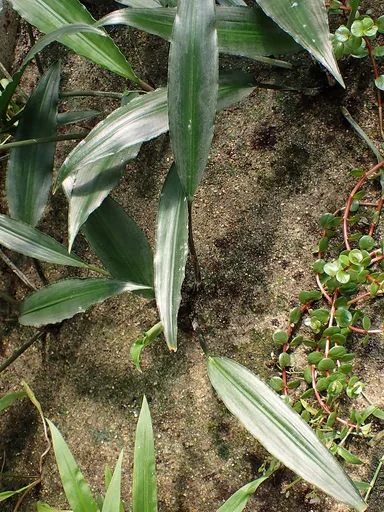 Medium lightMidground15.7 in (40 cm)
Lagenandra thwaitesii
Medium light · Midground
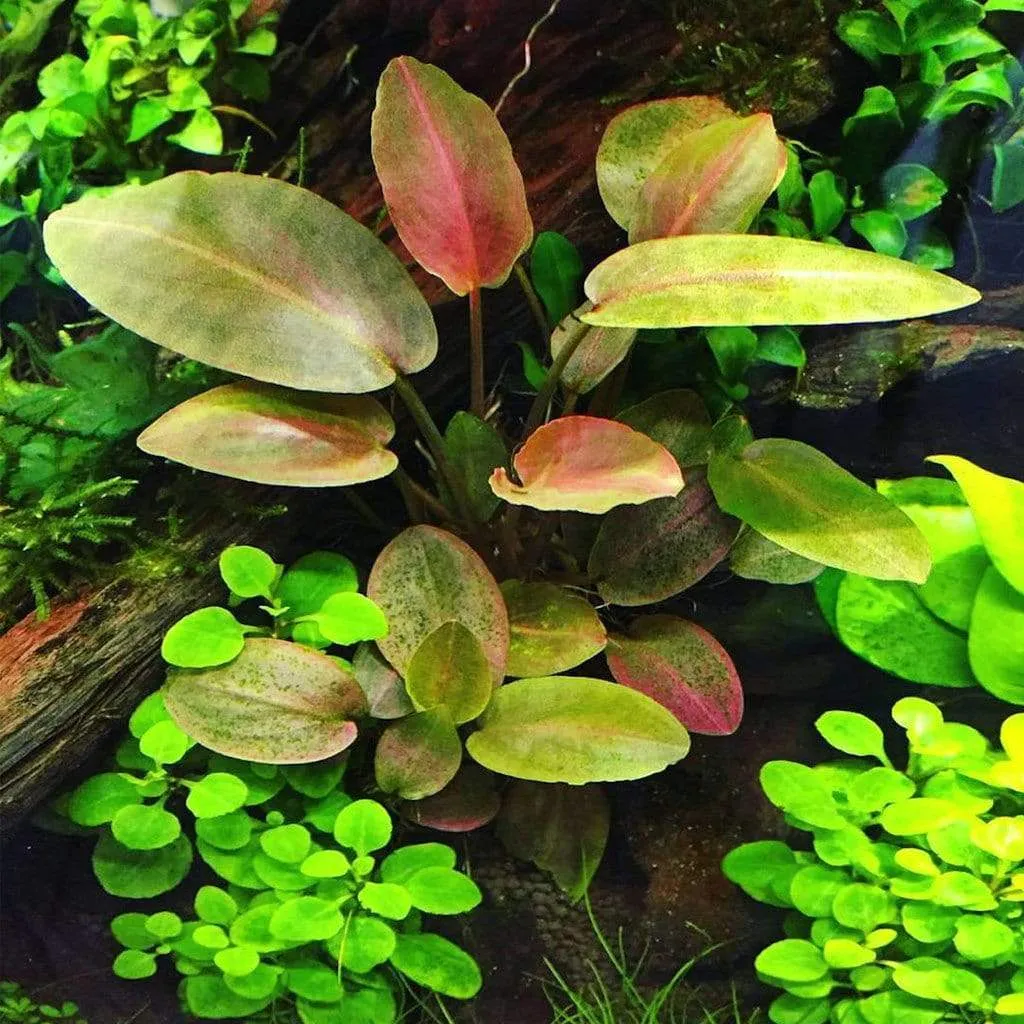 Medium lightMidground11.8 in (30 cm)
Lagenandra meeboldii
Medium light · Midground
- Medium lightMidground7.9 in (20 cm)
Lagenandra meeboldii Red
Lagenandra meeboldii 'Red'
Medium light · Midground
- Medium lightMidground7.9 in (20 cm)
Lagenandra meeboldii Red Round
Lagenandra meeboldii 'Red Round'
Medium light · Midground
- Low lightMidground5.9 in (15 cm)
Lagenandra nairii
Low light · Midground
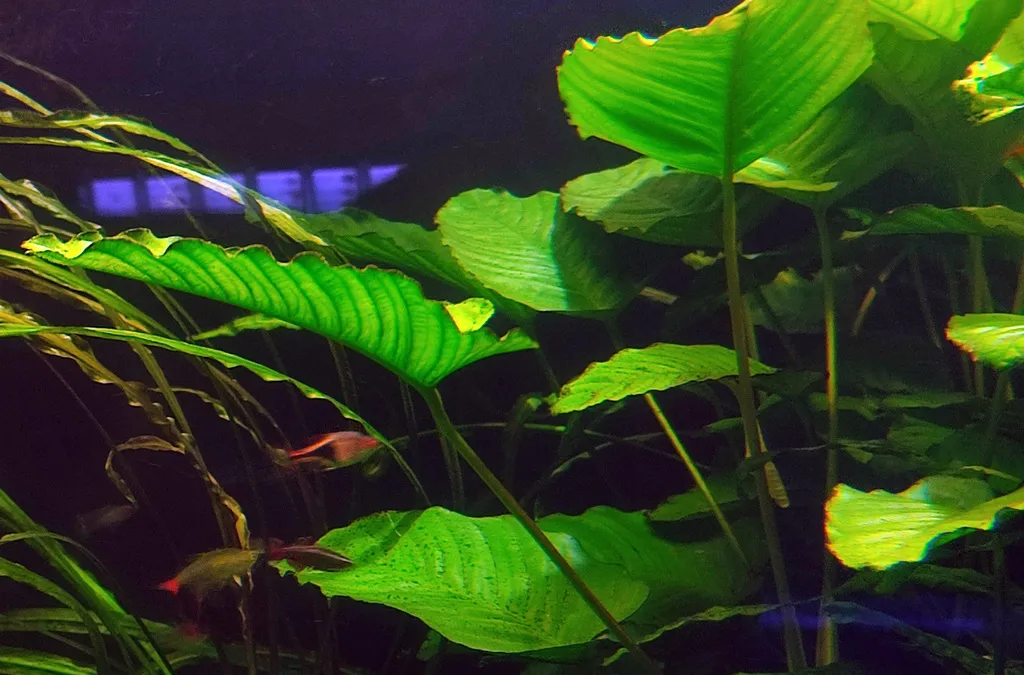 Low lightBackground19.7 in (50 cm)
Anubias gigantea
Low light · Background