Gratiola
Gratiola viscidula
Also known as Short's hedgehyssop, Sticky hedge hyssop, Sticky hedgehyssop
FreshwaterStemCuttingsSide shoots
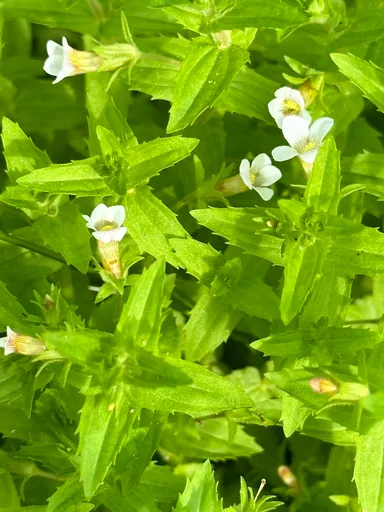
Care at a glance
- Light
- Medium light
- CO2
- CO₂ beneficial
- Temperature
- 59–82°F
- 15–28°C
- Max height
- 5.9 in
- 15 cm
- Growth rate
- Slow
- Placement
- Midground
- Type
- Stem
- pH
- 6.0–7.0
- Hardness
- 0–12 dGH
- Spread
- 2 in (5 cm)
- Nutrient uptake
- Root + water column
- Growth region
- Submersed or emersed
- Difficulty
- Medium
- Family
- Plantaginaceae
- Origin
- Southeastern and eastern United States (Florida north to Ohio and Delaware, west to Missouri)
Overview
Gratiola is a slow-growing stem plant for the foreground or midground, and a fairly recent addition to the aquarium hobby. It is rated medium in difficulty.
Caring for Gratiola
Plant Gratiola stems in the substrate a little apart. It is unusually flexible, and it can also be tied to wood or rock like a moss for a shag-carpet effect.
Give it medium light and clean, soft water that is slightly acidic to neutral, at 59 to 82°F (15 to 28°C). CO2 is not required, but it makes growth faster and denser. It feeds through its roots and its leaves, so root tabs and a liquid fertilizer both help.
Gratiola is a slow grower that needs patience. Trimmed low, it forms dense, flat, wide cushions. To make more, cut off the top of a stem or a side shoot with a few leaves and replant it.
Good to know
Gratiola viscidula belongs to the family Plantaginaceae, in the genus Gratiola, the hedge-hyssops. The species name viscidula refers to the slightly sticky, glandular texture of the plant. It has narrow, light green leaves. Despite its compact aquarium look, in the wild it grows as an emergent marsh herb.
In the wild
Gratiola is a North American wetland plant from the southeastern and eastern United States, from Florida north to Ohio and Delaware and west to Missouri. It grows in wet ground, ditches and pond margins.
Common questions
Does Gratiola need to be planted in the substrate?
Yes. Strip the leaves from the lower part of each stem, then push the stems into the substrate one at a time, a little apart.
Does Gratiola need CO2?
No, but it helps. Gratiola can grow without injected CO2, and added CO2 makes it grow faster.
How much light does Gratiola need?
Gratiola wants medium light. A light sold for planted tanks covers it.
Does Gratiola need root tabs?
They help. Gratiola takes nutrients through both its roots and its leaves. Root tabs near its roots and a liquid fertilizer cover both.
How do you propagate Gratiola?
Gratiola propagates by cuttings and side shoots. Cut off the top of a stem and replant it, and the stump left behind grows new shoots. Cut a side shoot off once it has a few leaves and plant it on its own.
How tall does Gratiola grow?
Gratiola grows to about 5.9 in (15 cm) tall. It grows slowly and rarely needs trimming.
Related plants
 High lightMidground9.8 in (25 cm)
Limnophila Vietnam
Limnophila sp. 'Vietnam'
High light · Midground
 High lightMidground11.8 in (30 cm)
Bacopa madagascariensis
High light · Midground
 High lightMidground11.8 in (30 cm)
Limnophila aromatica Mini
Limnophila aromatica 'Mini'
High light · Midground
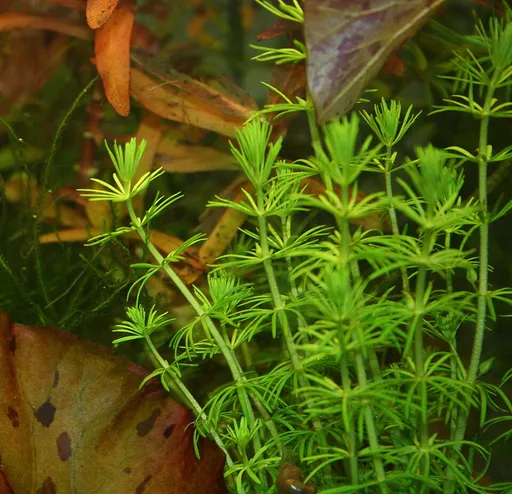 High lightMidground11.8 in (30 cm)
Needle leaf bacopa
Bacopa myriophylloides
High light · Midground
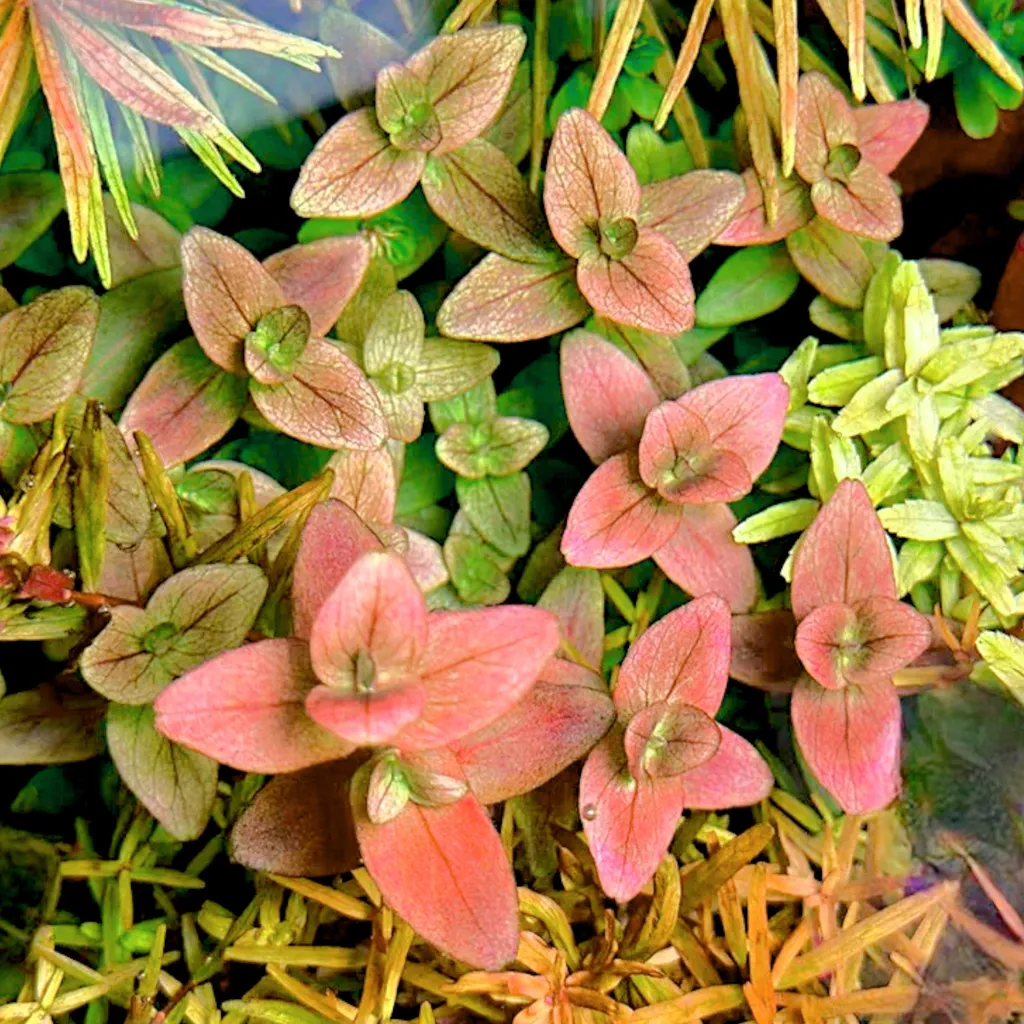 High lightMidground11.8 in (30 cm)
Purple bacopa
Bacopa salzmannii
High light · Midground
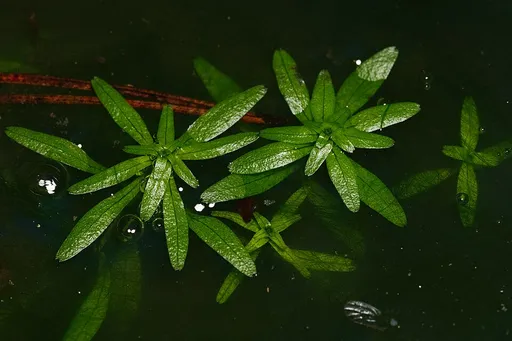 High lightMidground11.8 in (30 cm)
Water starwort
Callitriche palustris
High light · Midground