Kaskazini mbuna
Melanochromis kaskazini
FreshwaterFish
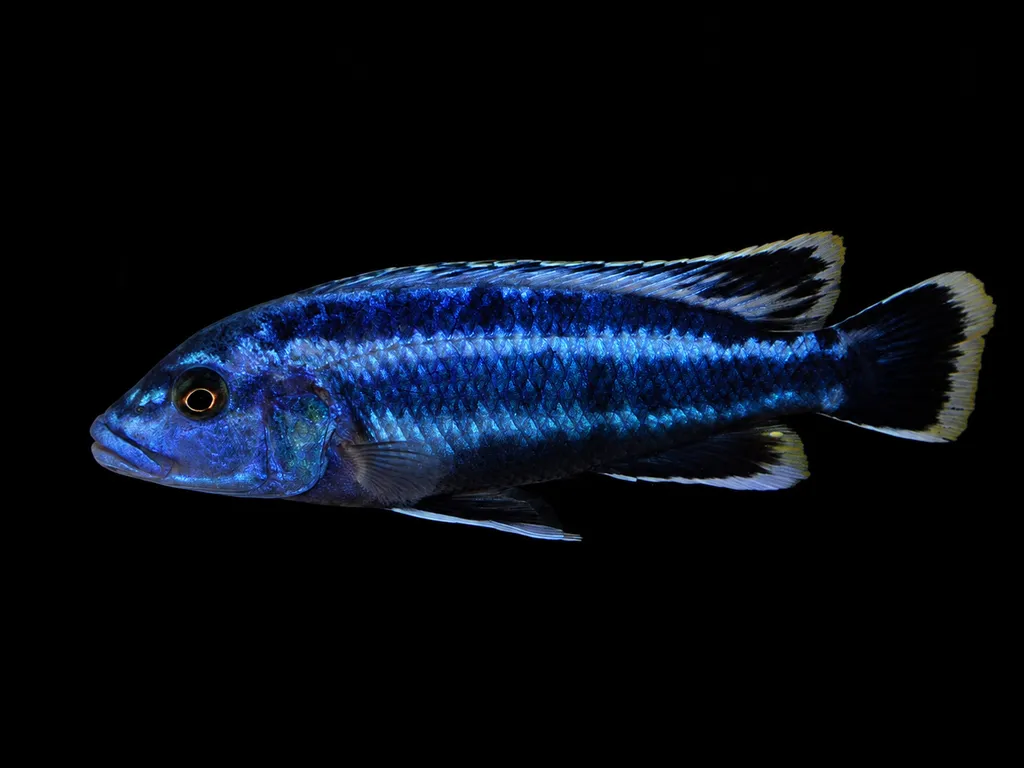
Care at a glance
- Temperature
- 75–82°F
- 24–28°C
- pH
- 7.5–8.5
- Adult size
- 5.1 in
- 13 cm
- Minimum tank
- 66 gal
- 250 L
- Temperament
- Aggressive
- Social behavior
- Social
- Tankmates
- With caution
- Swim level
- Bottom
- Diet
- Omnivore
- Difficulty
- Medium
- Breeding
- Mouthbrooder · Medium
- Rarity
- Rare
- Family
- Cichlidae
- Origin
- Lake Malawi, northern coasts
Overview
The Kaskazini mbuna is an active, aggressive cichlid from Lake Malawi for a rocky tank. It suits a keeper with some experience.
Did you know
In the wild, the Kaskazini mbuna is not a fixed-territory fish. It roams the rocks in small foraging groups, hunting larger invertebrates and small fish.
Caring for the Kaskazini mbuna
Give a group of Kaskazini mbuna at least 66 gal (250 L), so they have room to patrol and hold a territory. Build piles of rock for cover and territory over a sand floor, broken by open sand lanes.
The water should be hard and alkaline, at 75 to 82°F (24 to 28°C) and a pH of 7.5 to 8.5. Feed a varied diet of both vegetable and meaty foods.
Keep it as a group, usually one male with several females. It is an active, boisterous fish that keeps to the lower water among rock, and it can push smaller or meeker fish around. Choose tank mates with care, and give it equally robust rift-lake company.
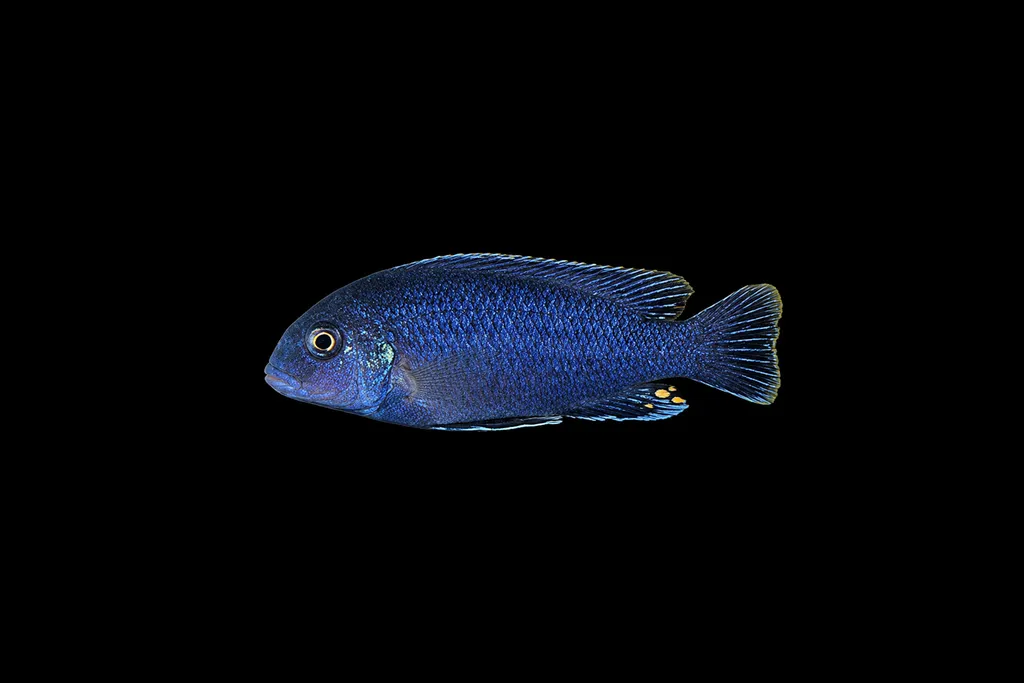
Males turn a clean cobalt blue with no pale stripes. Females and young stay whitish, with orange in the anal fin. It is a maternal mouthbrooder, and the female holds the eggs and fry in her mouth. It is moderately hard to breed.
Good to know
The Kaskazini mbuna, Melanochromis kaskazini, is a Lake Malawi cichlid in the mbuna group. Its species name, kaskazini, means northern in Kiswahili, the language spoken along its shoreline. The name refers to its range in the north of the lake.
In the wild
The Kaskazini mbuna lives along the northern coasts of Lake Malawi, in the intermediate zone where rock gives way to sand. The water there is hard and alkaline.
Common questions
What size tank does a Kaskazini mbuna need?
A Kaskazini mbuna needs at least 66 gal (250 L). It spends most of its time in the bottom.
What temperature and pH does a Kaskazini mbuna need?
A Kaskazini mbuna is comfortable at 75–82°F (24–28°C) with a pH of 7.5–8.5.
What does a Kaskazini mbuna eat?
A Kaskazini mbuna eats a varied diet of both vegetable and meaty foods.
How big does a Kaskazini mbuna get?
An adult Kaskazini mbuna reaches about 5.1 in (13 cm).
How can you tell a male Kaskazini mbuna from a female?
Males are a clean cobalt blue with no pale stripes. Females stay whitish and show orange in the anal fin, as young fish do.
How does a Kaskazini mbuna breed?
A Kaskazini mbuna is a maternal mouthbrooder, so the female carries the eggs and fry in her mouth. Breeding it is moderately hard.
Related species
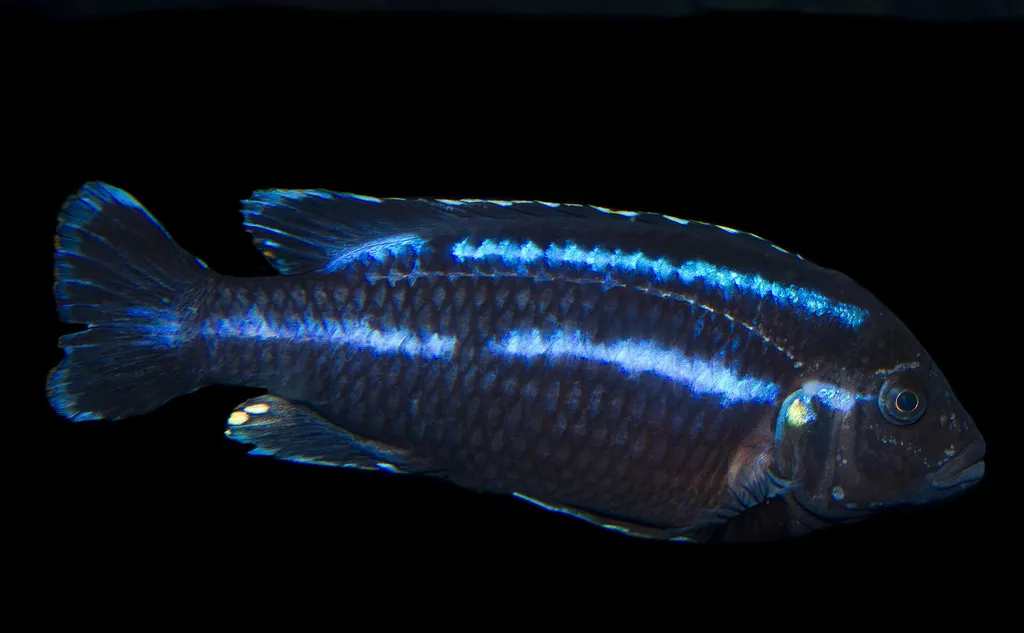 5.5 in (14 cm)66 gal (250 L)75–82°F (24–28°C)
Loria's melanochromis
Melanochromis loriae
5.5 in (14 cm) · 66 gal (250 L)
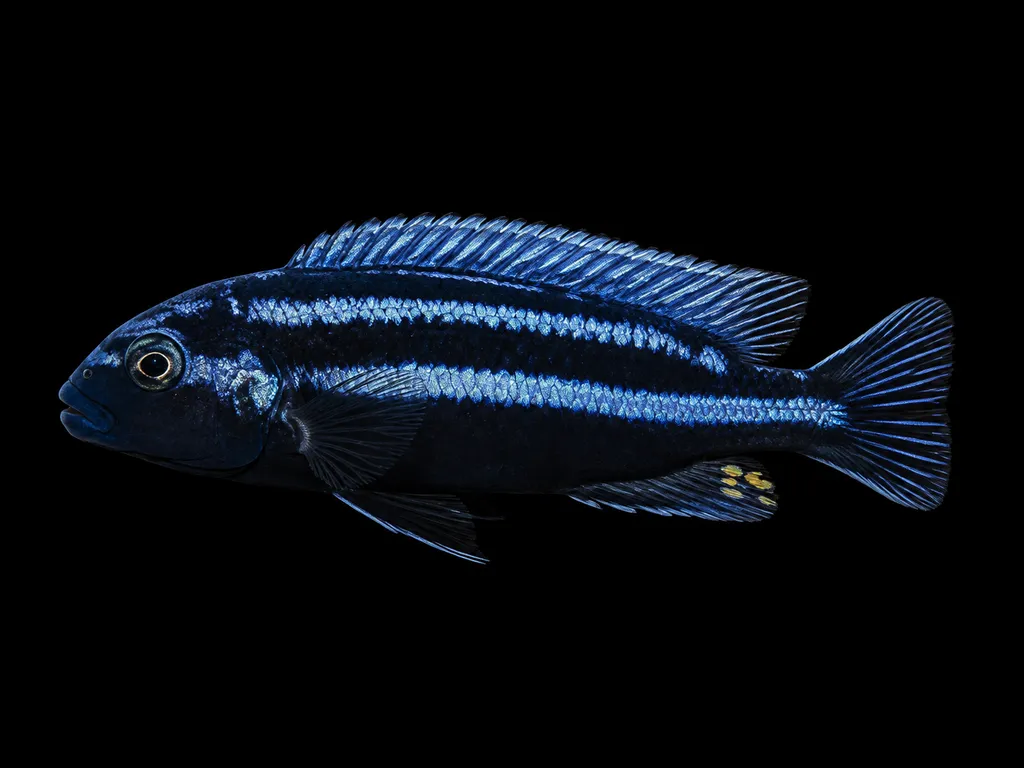 4.7 in (12 cm)66 gal (250 L)75–82°F (24–28°C)
Deepwater melanochromis
Melanochromis heterochromis
4.7 in (12 cm) · 66 gal (250 L)
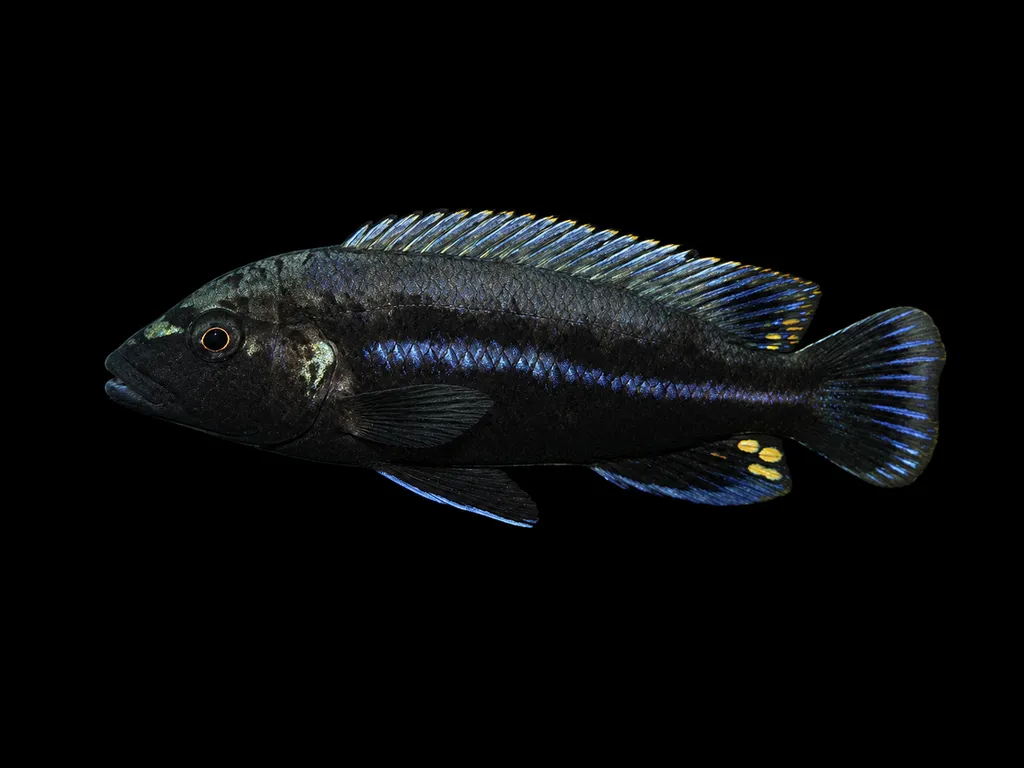 4.3 in (11 cm)66 gal (250 L)75–82°F (24–28°C)
Blotch melanochromis
Melanochromis baliodigma
4.3 in (11 cm) · 66 gal (250 L)
 3.1 in (8 cm)53 gal (200 L)75–82°F (24–28°C)
Wochepa melanochromis
Melanochromis wochepa
3.1 in (8 cm) · 53 gal (200 L)
 4.7 in (12 cm)53 gal (200 L)75–82°F (24–28°C)
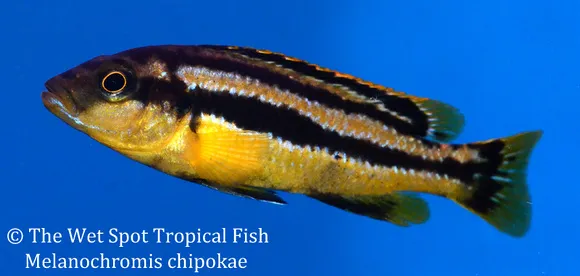
Chipokee cichlid
Melanochromis chipokae
4.7 in (12 cm) · 53 gal (200 L)
 4.7 in (12 cm)42 gal (160 L)73–81°F (23–27°C)
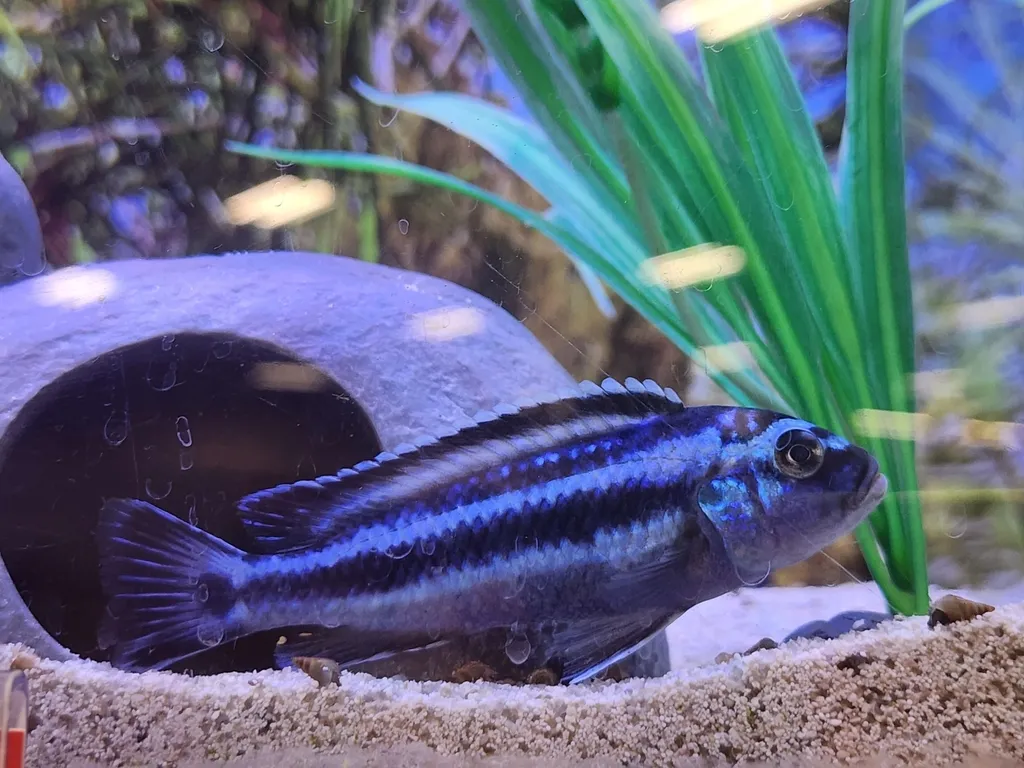
Johanni cichlid
Melanochromis johannii
4.7 in (12 cm) · 42 gal (160 L)