Pancho Villa firemouth
Thorichthys panchovillai
Also known as Panchovillai cichlid
Care at a glance
- Temperature
- 75–84°F (24–29°C)
- pH
- 7.0–8.2
- Adult size
- 4.7 in (12 cm)
- Minimum tank
- 53 gal (200 L)
- Temperament
- Mostly peaceful
- Social behavior
- Solitary
- Tankmates
- Tankmates with caution
- Swim level
- Bottom
- Difficulty
- Medium
- Breeding
- Medium
- Rarity
- Rare
- Origin
- Coatzacoalcos basin, Mexico
- Family
- Cichlidae
Overview
This is one of the smaller firemouth-type cichlids, kept best as a single fish or a bonded pair rather than a group, since pairs hold a bottom territory and will chase off intruders. Like its relatives it bluffs more than it bites, flaring its bright throat and gill covers to look bigger, but it stays mostly peaceful with calm, similarly sized tankmates. It feeds low down, sifting sand and taking small invertebrates, so offer sinking foods, frozen bloodworm and brine shrimp, and the occasional vegetable-based pellet. A pair needs around 200 liters with sand, cover, and a few flat stones or caves for spawning.
In the wild
It is endemic to the Coatzacoalcos river basin on the Atlantic slope of southern Mexico, where it keeps to quieter, weedy stretches over sand and among roots. Set up a tank with a soft sand bed, driftwood, hardy plants or leaf litter, and open swimming space broken by low cover. Keep the water warm at about 24 to 29 C and neutral to slightly alkaline, roughly pH 7 to 8.2, with clean, well-filtered conditions and gentle flow.
Good to know
Thorichthys panchovillai is a small cichlid of the family Cichlidae, reaching about 12 centimeters. It was described in 2017 from the Coatzacoalcos basin and named after the Mexican revolutionary Francisco Pancho Villa. The species is polymorphic, appearing in blue, green, and gold or orange forms depending on where in the basin it is found. Like other Thorichthys it pairs up to breed, laying eggs on a cleaned surface and guarding the young together, a project of moderate difficulty.
Did you know
The female carries a private badge of identity: a distinct black blotch set between the fifth and sixth spines of her dorsal fin, a marking the describers used to help tell this firemouth apart from its close relatives.
Common questions
What size tank does a Pancho Villa firemouth need?
A Pancho Villa firemouth needs at least 53 gal (200 L). It spends most of its time in the bottom.
What temperature and pH do Pancho Villa firemouth need?
Pancho Villa firemouth are comfortable at 75–84°F (24–29°C) with a pH of 7.0–8.2.
How big do Pancho Villa firemouth get?
An adult Pancho Villa firemouth reaches about 4.7 in (12 cm).
Where to buy
Some links may not be the exact species or variety.
…or ask your local fish store.
Appears in
Keeping Pancho Villa firemouth?
Track water tests, reminders and stocking fit.
Planning tankmates
See how Pancho Villa firemouth fits a stocking plan. Open the stocking calculator
Add to your site
Show this species on your own site: a shortcode for WordPress, or an HTML embed for anywhere else.
Related species
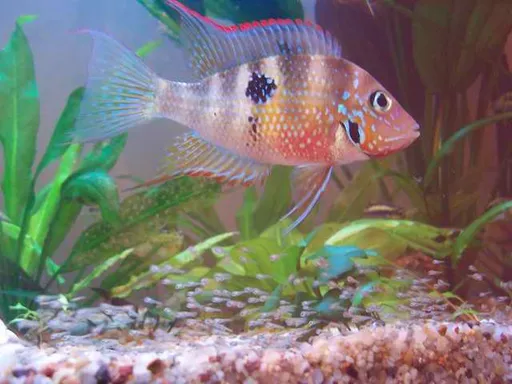
Ellioti cichlid
Thorichthys maculipinnisFreshwater5.9 in (15 cm)53 gal (200 L)75–82°F (24–28°C)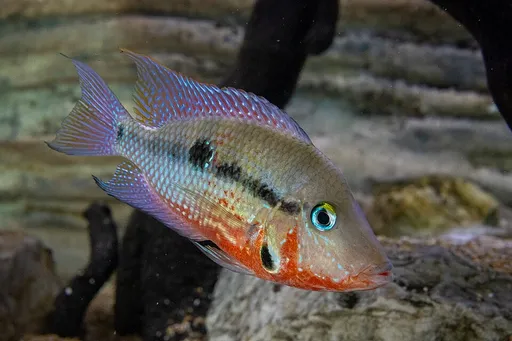
Firemouth cichlid
Thorichthys meekiFreshwater5.9 in (15 cm)30 gal (115 L)73–82°F (23–28°C)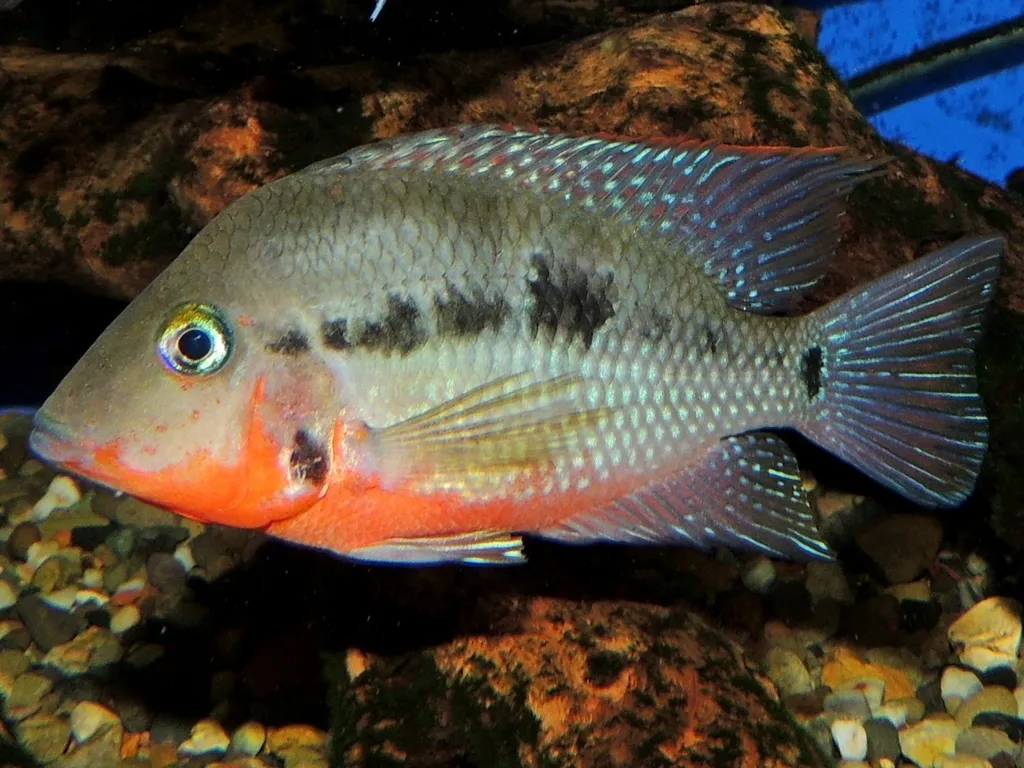
Yellow-cheek firemouth
Thorichthys helleriFreshwater6.7 in (17 cm)66 gal (250 L)75–84°F (24–29°C)Callolepis firemouth
Thorichthys callolepisFreshwater6.7 in (17 cm)66 gal (250 L)75–84°F (24–29°C)Yellow firemouth
Thorichthys affinisFreshwater6.7 in (17 cm)66 gal (250 L)75–84°F (24–29°C)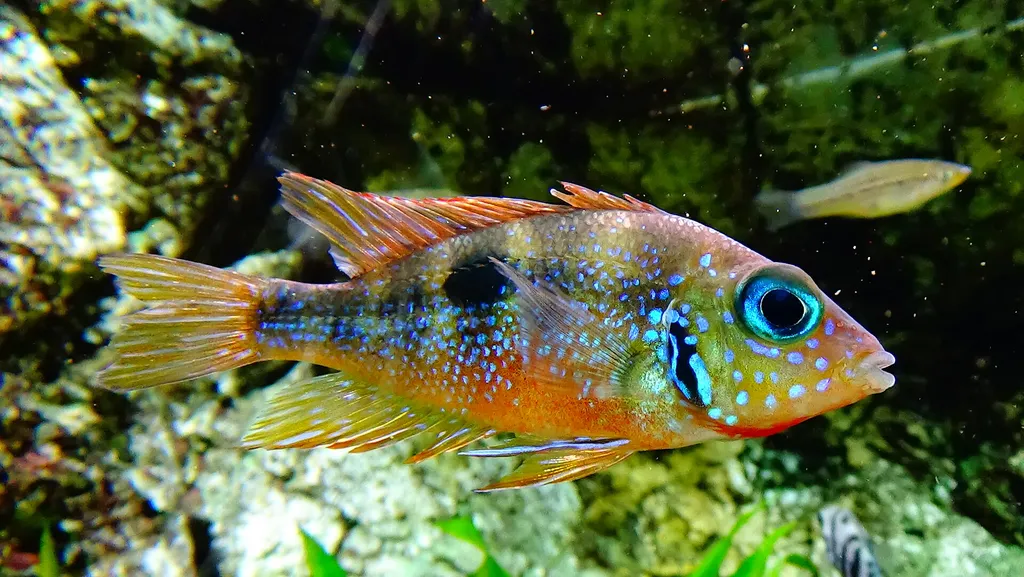
Blue flash firemouth
Thorichthys aureusFreshwater7.1 in (18 cm)66 gal (250 L)75–84°F (24–29°C)